
A Packing Checklist for Foil Insulated Mailers and Shipping Cartons
YUANEN’s self-adhesive foil bag page describes a peel-and-seal pouch and asks parcel buyers to assess it with the filled container and outer box. The existing sizing guide explains the bag body and flap. This checklist addresses the next decision: how to document the pouch, outer carton and receiving process as one sample pack-out before agreeing the shipping specification.
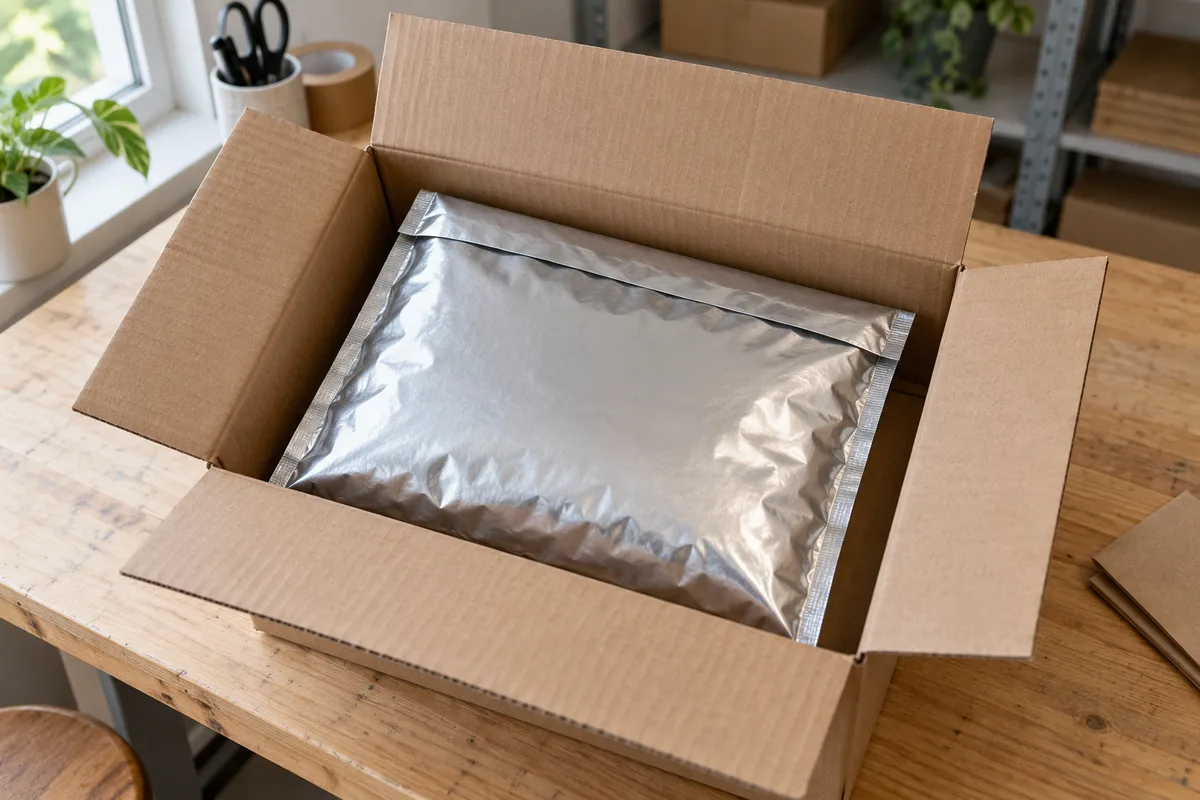
Assign a requirement to each packaging layer
List the primary closed container, foil-facing and EPE composite pouch, selected coolant if needed, protective materials and shipping carton. Identify which component you expect to contain the product, provide insulation or limit movement. The published foil construction does not prove cushioning, puncture resistance or carrier acceptance. Specify those requirements and an appropriate acceptance method for the complete parcel instead of treating the pouch as verified transport protection.
Close the loaded pouch before choosing the carton fit
Use the actual container and agreed refrigerant layout. Check that the flap reaches its intended adhesive contact area without forcing the side seals or pressing a lid. Keep the closure surface in the condition required by the sample instructions. Measure the closed loaded pouch in its shipping orientation, then check the carton’s usable interior. Include any agreed restraint or separation; do not choose a carton from the empty flat-pouch dimensions alone.
Inspect edge contact and movement in a sample trial
Before a trial, photograph the pouch closure and its position in the carton. Mark where container corners, carton folds or protective inserts contact the pouch. Have the responsible team agree the handling and transit checks required for the route; this article does not prescribe a shipping test standard. After the agreed trial, compare the photographs and inspect seal opening, rubbing, punctures, displaced coolant and container damage. Separate each observation so a torn pouch is not recorded as a temperature-test result.
Make the receiving record usable
Agree which identification must remain readable after the outer carton and pouch are closed. Confirm its placement with the shipper or recipient; this is not regulatory labelling advice. At receipt, record the pack-out reference before opening, then the condition of the carton, pouch closure and primary container in that order. A delivery receipt alone cannot establish seal integrity or food temperature.
- Pack-out reference: pouch sample version, container, carton, protection and coolant configuration.
- Before dispatch: closure photo, orientation, contact points and identification visibility.
- At receipt: outer damage, seal condition, internal movement and container condition.
- Decision: defect location, revision needed and the acceptance check to repeat.
Confirm thermal requirements and the production sample
Where temperature matters, test the complete parcel with the selected refrigerant, starting temperature, ambient exposure and route duration. Dimensional or closure approval does not establish a holding time. Send YUANEN the pack-out record, quantity, artwork and destination, and ask the quotation to identify pouch construction, finished dimensions, flap arrangement and the sample basis. The product page notes that handmade samples can differ from machine-made orders; agree which production-representative checks remain before accepting the bulk specification.
Sources and scope
Check the cited sources. Product specifications are subject to order confirmation and the agreed sample. This article is not a product test report or a regulatory certification.