
When one grocery order needs separate insulated bags
A shopper can place one order that the packing team must release in several packages. Before quoting custom insulated grocery bags, ask the store to pack a representative mixed basket under its own separation and temperature procedures. Count the groups that need an insulated carrier and measure each group. Adding up litres can suggest enough total volume while overlooking the dimension that limits the opening: the width of a sealed tray inside its outer bag.
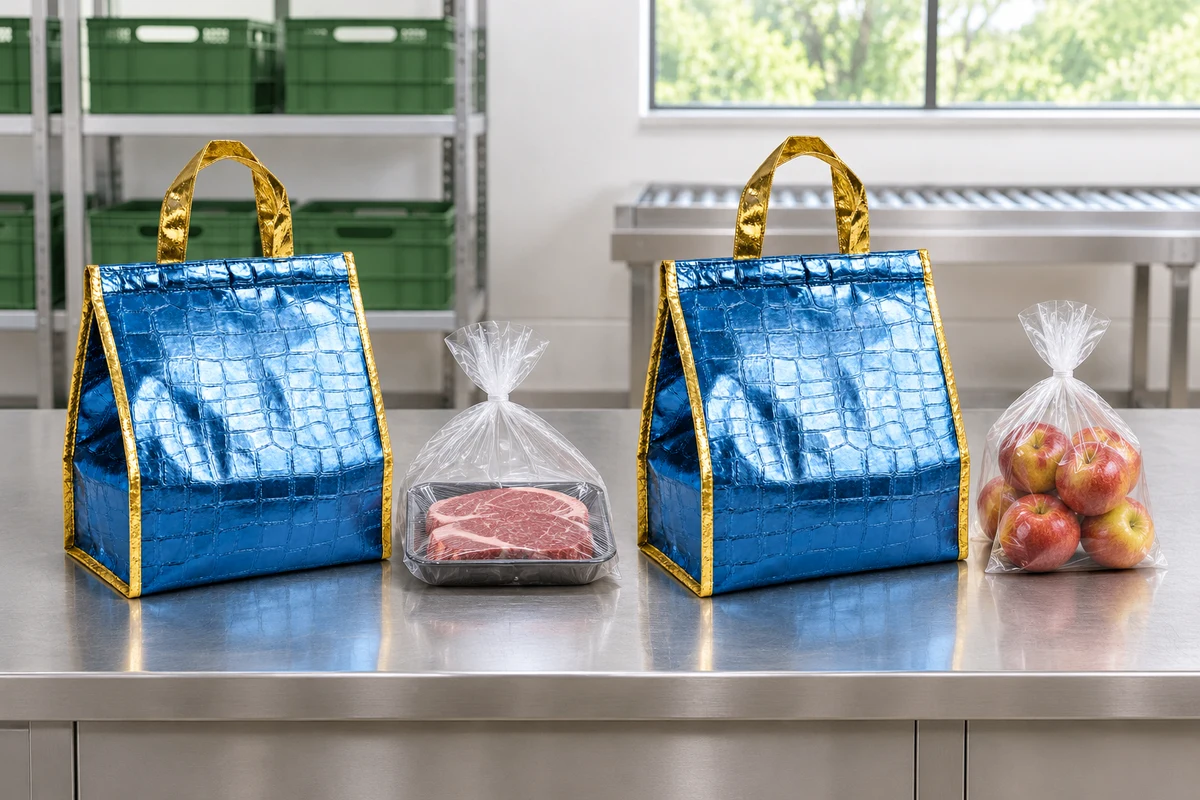
Draw the package boundary before choosing a size
In its produce buying guidance, the US FDA advises bagging fresh fruit and vegetables separately from raw meat, poultry and seafood at the market. That gives the buyer a reason to show separate packing groups in the brief. It does not specify the number or model of commercial insulated totes. The store still has to decide which groups need insulation and what primary and secondary packaging its approved process requires.
For a trial order, list the sealed tray, any secondary bag and its closure as one packed unit. List the produce in its own packaging as another. If only the first group requires a thermal outer, quote that outer and identify how the second package travels. If both groups require separate thermal outers, request a price for each size or for a shared model that has passed both packing trials. This distinction changes the order quantity even when the customer basket is identical.
Try the widest packed item through the opening
For the upright zippered tote, measure the tray rim and the bulk at the tied or folded top of the secondary bag. Add any coolant required for that group in its intended position. Lower the packed unit through the opening in the orientation the store permits. Check whether the packer has to tip the tray, compress the produce or trap the secondary bag in the zipper. Record the point of contact. A larger quoted volume alone will not tell a supplier which dimension to change.
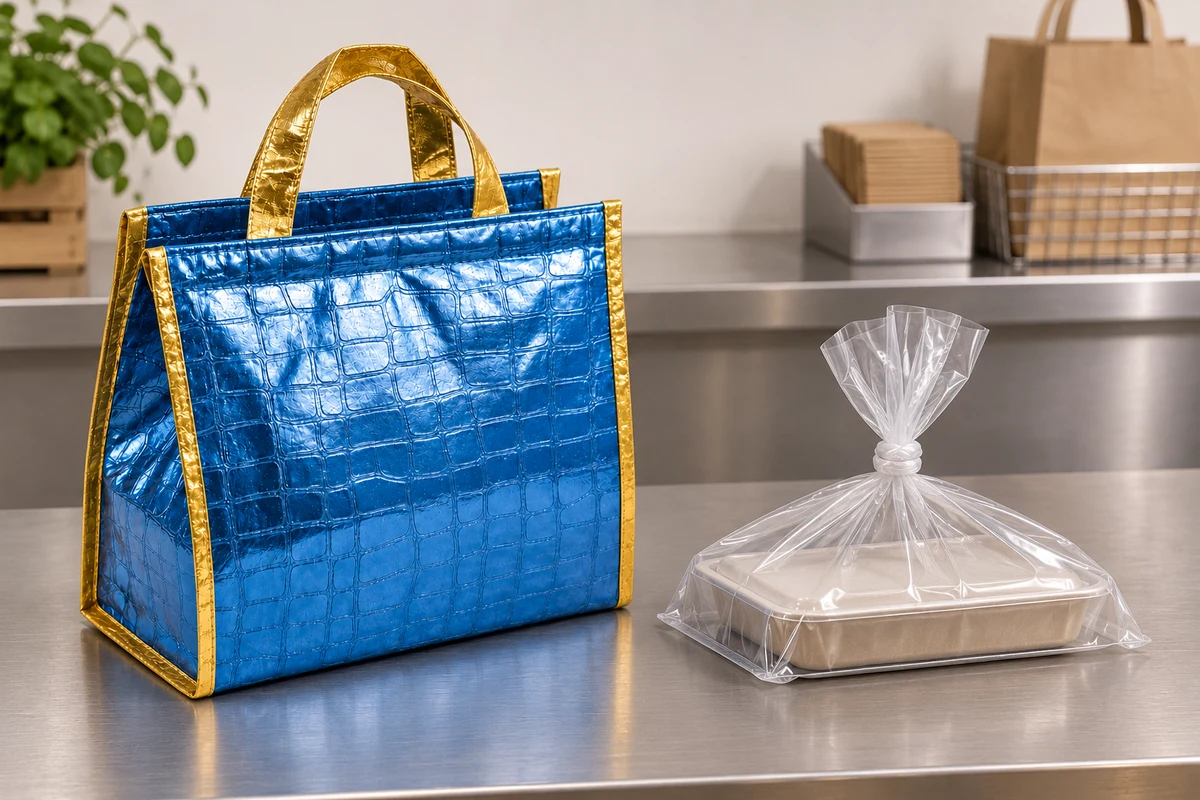
Rehearse a split order at the handoff
Give the two trial packages the same order reference and a distinguishable part identifier on the store’s normal dispatch record. Have a second person collect the order from staging using only that record. If one package can leave unnoticed, revise the count or marking step before specifying custom printing. Permanent branding identifies the store; it cannot identify which parts belong to today’s particular order.
Send the supplier a packing photo for each group, the maximum packed dimensions, carry direction, closure clearance and the number of outers needed at peak dispatch. Keep the thermal trial tied to each actual load and route. A successful fit answers the handling question; temperature retention and any leakage claim require their own evidence for that arrangement.
Sources and scope
Check the cited sources. Product specifications are subject to order confirmation and the agreed sample. This article is not a product test report or a regulatory certification.