
Evaluate Pizza Box Ventilation with the Delivery Bag
Choose a pizza delivery bag together with the carton and the packing method used on the route. When moisture or crust texture is a concern, first establish where the problem appears, then compare a defined change while recording the full arrival condition. The following purchasing procedure helps a restaurant turn those observations into a reproducible sample request.
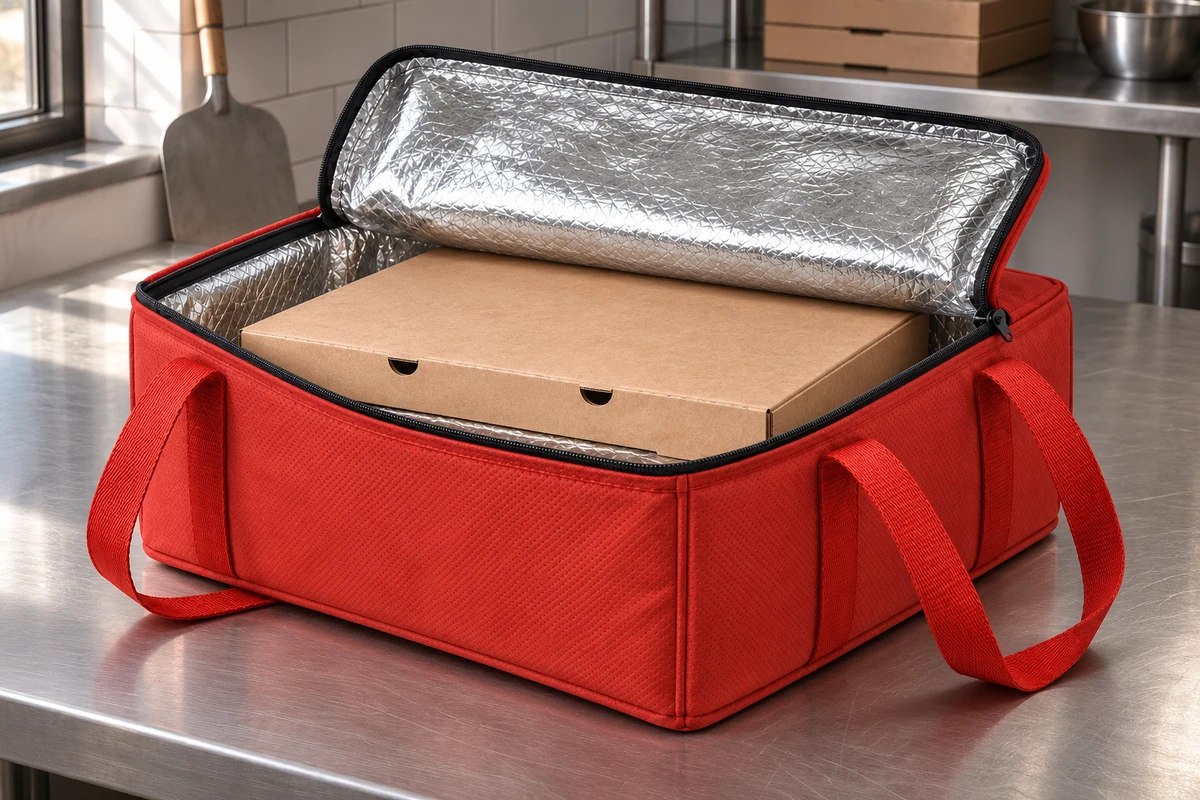
Start with the two closures in the loaded system
A pizza carton and its insulated carrier enclose different spaces. A carton opening can communicate with the space inside the carrier while the carrier itself remains zipped shut. Photograph the closed carton before loading, then photograph its position inside the bag. Mark any opening that touches a sidewall, another box, a receipt sleeve or a folded flap. This establishes which openings remain exposed in the actual arrangement.
Condensation is one mechanism worth investigating. The US EPA explains that warm humid air can form condensation when it contacts a cold surface. In a pizza pack-out, this supports looking at moisture and surface conditions together. It supplies no tested vent size or delivery duration for a bag. Any proposed ventilation change therefore needs the paired arrival-temperature and texture observations described below.
The YUANEN pizza format has a low, wide body, a zipper, a non-woven exterior and an aluminum-foil lining. Its current specification describes passive insulation. Dedicated exhaust vents, absorbent liners and a heating system would each need a separately agreed design and sample. Begin with the supplied configuration so that a trial result can be traced to something the supplier can reproduce.
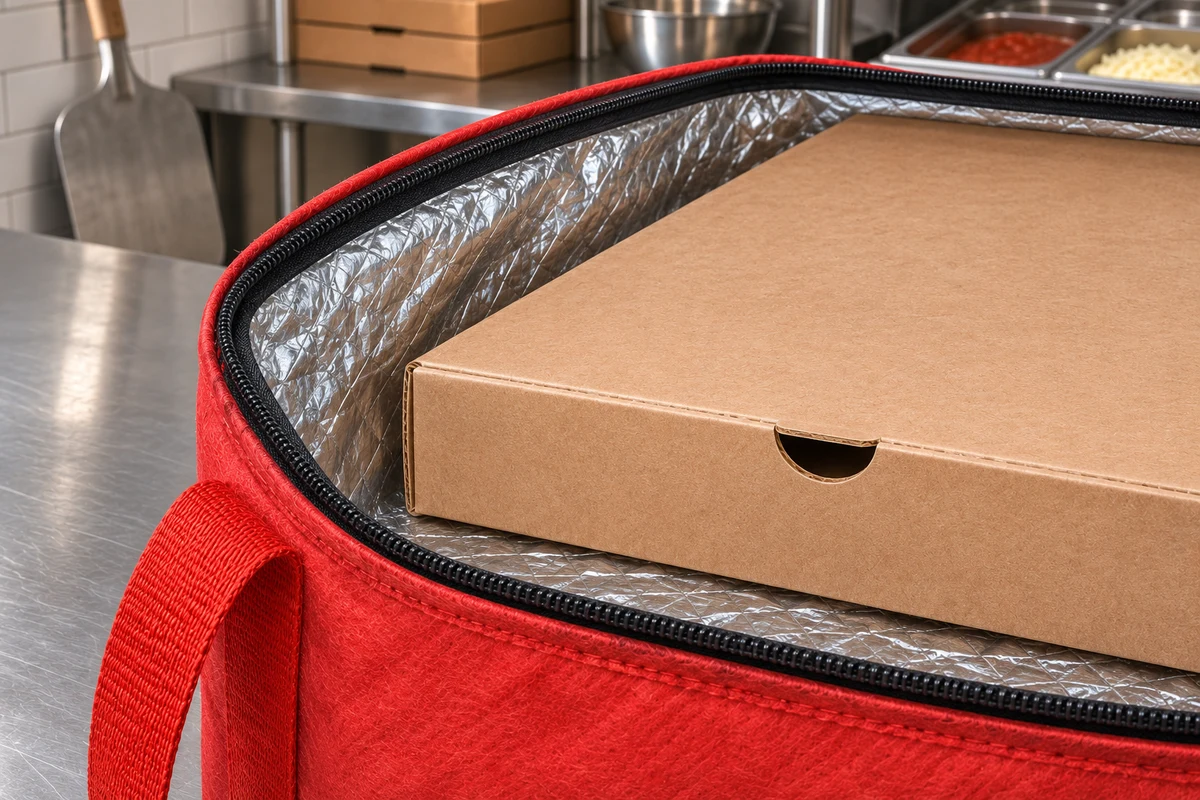
Record where the problem appears
Inspect the carton lid, the underside of the carton, the carrier lining and the pizza separately at the agreed handover point. Record visible moisture, carton deformation and the operator’s texture assessment alongside the time and temperature observations required by the existing food-handling procedure. A wet lining alone cannot identify the reason for a soft crust. The food, carton and loading process remain possible contributors until the comparison separates them.
Use consistent descriptions that different staff can repeat. For example, distinguish visible droplets on the lid from a softened carton corner, and distinguish a box that bends during lifting from moisture visible before lifting. Keep photographs of the same locations. These observations give the next sample request a defined problem to address and help avoid ordering a different bag for a defect that first appears in the carton.
| Observation | Next comparison | Decision limit |
|---|---|---|
| Moisture inside the carton | Compare named carton designs with the same carrier and loading method. | Record arrival temperature and texture on each run. |
| Carton opening blocked after loading | Review placement and clearance with the same closed carton. | An exposed opening alone does not prove acceptable delivery. |
| Lining wet while carton condition varies | Record box position, loading time and opening history. | Investigate the differences before attributing the result to material. |
Make each comparison answer one purchasing question
Keep a record of the normal box and carrier as the reference. To compare carton designs, keep the bag version, loading pattern, menu item, portion, dispatch procedure and route conditions as consistent as the operation can manage. Log departures from those conditions. To compare carrier revisions, use the same named carton. Changing both at once can evaluate a complete package, but attributing the result to either component requires a further comparison.
Define acceptable arrival temperature, texture and packaging condition before the run, using the operator’s established requirements. Take observations at the same handover point. An attractive photograph from a short trip offers little guidance for a route with repeated stops. Include the actual opening sequence and representative loads, then retain the conditions with the result. Food release remains subject to the operator’s food-safety process.
Use conflicting results to narrow the next sample
If a revised arrangement gives the preferred texture but misses the agreed temperature condition, record both outcomes. Request a new comparison that addresses the failed condition before approving a production change. If the temperature condition passes while carton quality fails, document where the carton changes shape or becomes wet and ask for a compatible box or packing revision. This keeps each approval tied to the complete delivery requirement.
An unzipped carrier changes the tested closure condition. If staff opened the zipper during the run, record when and why. A sample that depends on an improvised opening cannot be specified solely by bag dimensions and material. Agree a repeatable operating method or a separately developed feature, then evaluate that exact version under the intended handling conditions.
Put the accepted combination into the order record
Attach the box identifier, closed dimensions, opening locations, loaded photographs, carrier sample code and agreed closure method to the enquiry. Include the observations that prompted the request and the criteria used to accept the combination. Ask the supplier to identify which proposed changes affect the sample, unit quote or production specification. A reply describing only “better insulation” leaves the moisture-related question unresolved.
Retain the accepted box and carrier revisions for repeat orders. When a restaurant changes its carton supplier, recipe, portion or delivery routine, review whether the earlier comparison still represents the new arrangement. The useful purchasing record is the combination and its observed conditions. YUANEN’s bag page provides the current material and customization scope, while sample evaluation establishes suitability for the buyer’s particular operation.
Sources and scope
Check the cited sources. Product specifications are subject to order confirmation and the agreed sample. This article is not a product test report or a regulatory certification.