
Test the Packing Steps Before Batch-Sealing Insulated Pouches
A container that fits a pouch has answered a sizing question. It has not shown whether different operators can follow the same packing sequence. Before planning a batch, agree a short process trial using the intended bag sample and keep the steps, interruptions and closure observations together.
Identify the pouch and the method being tried
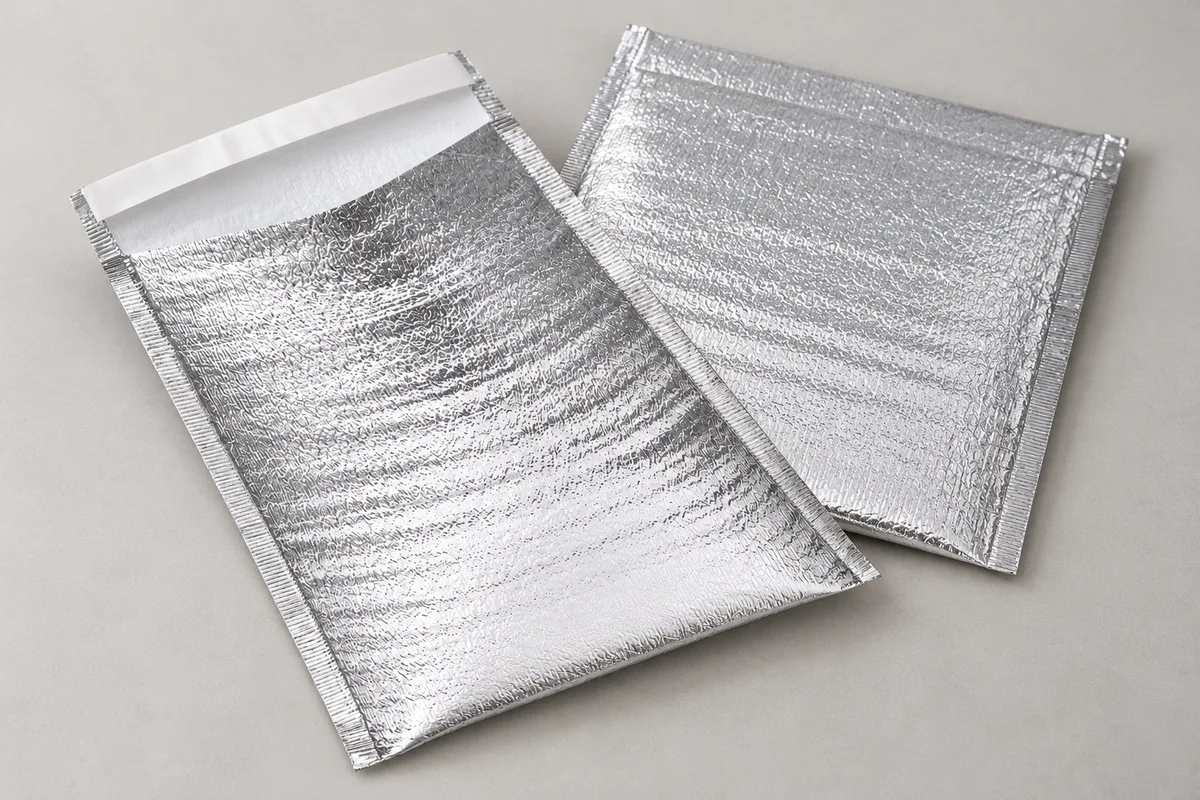
YUANEN’s flat self-adhesive foil bag has a foil-facing and EPE foam composite, heat-sealed edges and a peel-and-seal flap. The current photographs show the white release strip at the opening. This is not a zippered carrier or a gusseted pouch. Use that specific construction when describing the trial.
After confirming the container and bag size, identify the sample revision, adhesive arrangement and the supplier’s handling instructions. Ask whether the supplied trial sample represents the intended order construction. Keep an existing width, body-height and flap-fit record as a separate reference rather than repeating it as process evidence.
Write down what the operator actually does
Agree the operating sequence with the supplier before comparing operators. Record how the bag is presented, how the closed container is loaded, when the release paper is removed and how the flap is brought to its intended contact area. Do not invent a pressing force, adhesive temperature or dwell time from a photograph.
- Give each trial run a sample and operator identifier. Record the stated contact-surface condition and any departure from the agreed instructions, without treating the visual appearance alone as proof of suitability.
- Record interruptions where they occur, such as difficulty separating the release paper or a flap that needs repositioning. Keep the attempted action and the resulting observation linked to that run.
- If timing the process, define the start and end actions first. Separate active packing time, waiting and rework, and state the sample count. Do not turn a short trial into a promised production rate.
Agree when the closure will be inspected
Define the inspection points and acceptance criteria with the supplier and the team responsible for the packing process. At each agreed point, record visible flap alignment, wrinkles across the contact area, lifted edges or an opening that remains. Photographs should identify the run and inspection time, not just show the best-looking pouch.
Keep first attempts separate from corrected attempts. Ask how a misclosed pouch should be handled; do not assume that peeling it open and pressing it again is an approved repair. When changing an instruction, identify the new version and keep the comparison conditions clear.
Use the trial record in the order discussion
Send YUANEN the sample identifier, intended container, agreed sequence, inspection observations and unresolved handling questions. Confirm the proposed layer structure, adhesive arrangement and any requested packing equipment compatibility before ordering. Quantities, tolerances, delivery and the final specification remain subject to sample and order confirmation.
This article proposes a process record. It is not a completed seal test or evidence of airtightness, leak resistance, resealability, food-contact approval or thermal holding time. Evaluate the complete package under the intended handling and route conditions using an agreed test plan.
Sources and scope
Check the cited sources. Product specifications are subject to order confirmation and the agreed sample. This article is not a product test report or a regulatory certification.