
Will the beverage carrier work when only one cup remains?
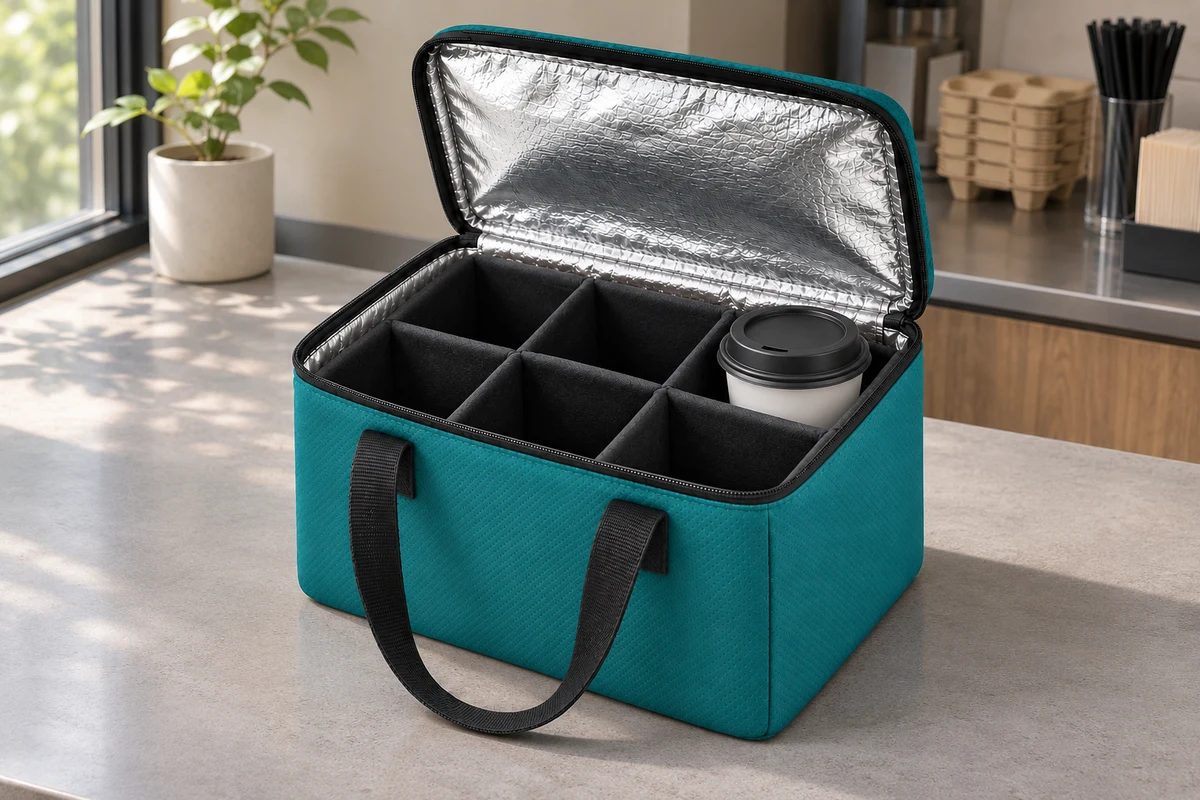
A cup that fits its cell at dispatch may still be hard to carry at the final stop. When approving a beverage delivery bag, test the load states the driver actually encounters, including a lone cup. A full-bag photo leaves out the moment when other cups are gone and the remaining weight sits to one side of the handles.
Start with the delivery sequence
Ask dispatch staff which cup is typically left after the first handoff and whether drivers are allowed to rearrange an order between stops. Use the actual cup, lid and sleeve combination, with a safe test load representative of the agreed fill mass. Begin with the planned dispatch layout. Remove each order as a driver would, close the top and repeat the same short lift, carry and set-down sequence. Keep the handle grip, surface and cup type consistent when comparing two layouts.
If the route starts with single-cup orders, test that condition directly as well. The buyer needs to know whether an ordinary operator can reproduce the accepted loading method. A layout that works only after a technician carefully centres every cup may be a poor choice for a busy counter.
Watch what moves first
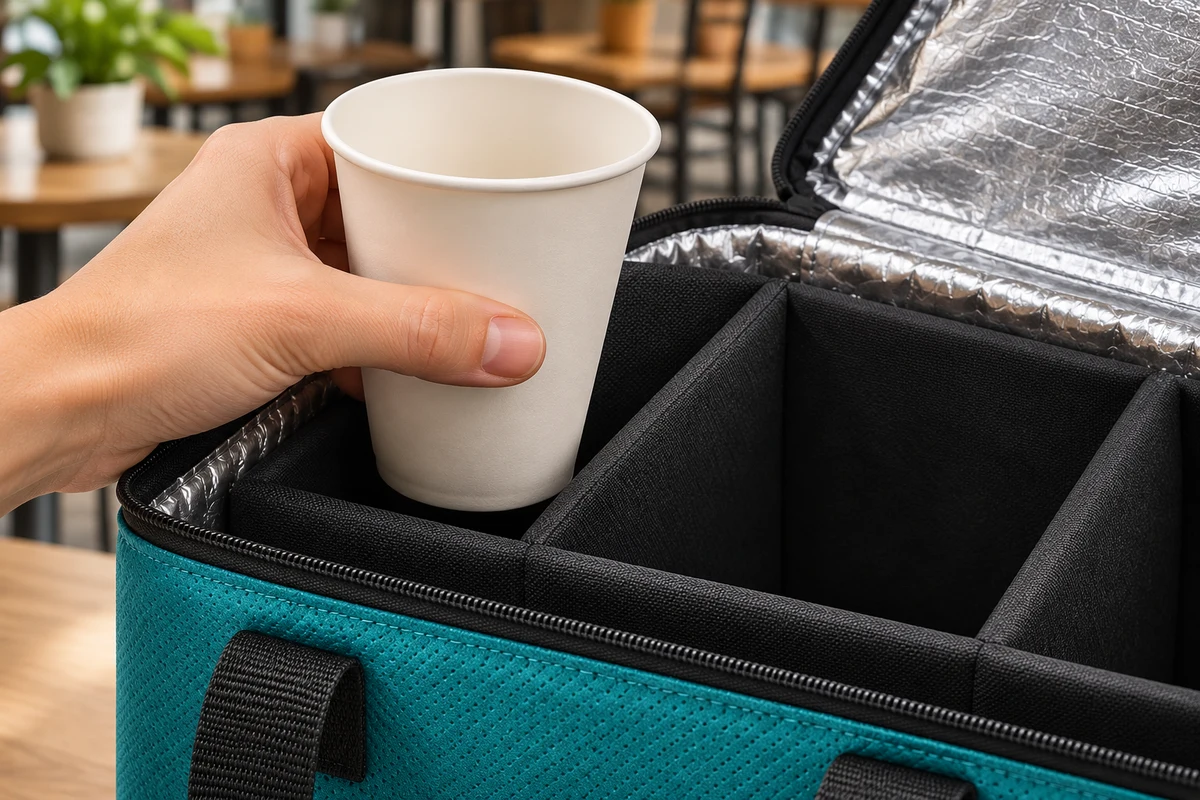
Keep the bag on a level bench to check the cup inside its cell. If the cup rocks while the base and divider remain still, examine where the tapered wall actually meets the divider. A wide lid can conceal clearance near the cup base. Request a sample matched to the named cup family and repeat with its sleeve fitted. Making every cell tighter can introduce a different problem if staff must pull on the lid to remove the drink.
If the cup and divider travel together, mark the divider position in a before-and-after photo and ask how the proposed insert locates in the bag. If they stay together and the entire base tilts only when lifted, photograph the occupied cell relative to the handles and compare the permitted placements. Changing the cup aperture would address the wrong interface in that case. Avoid proposing loose improvised fillers unless the buyer intends to specify and inspect them as components.
Put the accepted handling method on the order
Send the supplier the sample version, photographs of the smallest and most asymmetric intended orders, cup and lid references, and the agreed removal sequence. Specify whether relocating the last cup is allowed. If moving it is essential but the delivery process prevents that step, request a different divider arrangement or a smaller carrier for low-count orders and test again. Keep the two quotations comparable by identifying whether the insert is included.
The YUANEN top-opening carrier provides a reference for evaluating a proposed divider and short handles. The illustrated cup count is not a rated capacity. Keep any spill or temperature acceptance criteria in a separate test record for the complete filled cup, lid, carrier and route; a successful handling rehearsal cannot establish those results.
Sources and scope
Check the cited sources. Product specifications are subject to order confirmation and the agreed sample. This article is not a product test report or a regulatory certification.