
Position IBC Cover Openings Around Cap and Valve Access
An IBC cover can fit the cage while leaving the fill cap or the outlet hard to reach. Specify the tank envelope first. Then locate each fitting from a common reference and record the space needed to reach it. Approve those details on the tank and cover sample together. Tank capacity alone does not locate either opening.
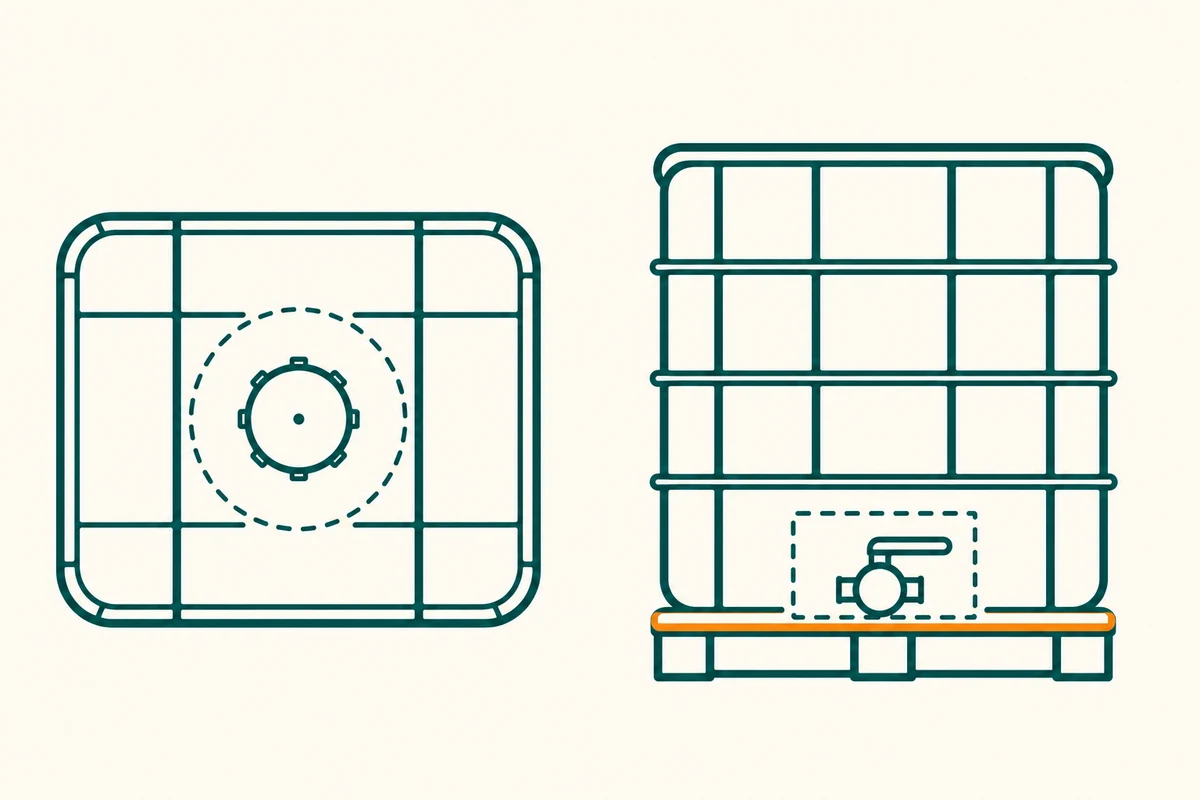
Give both views the same front edge
Mark the valve side as the front and identify the same left edge on the front view and top view. Use the top of the pallet deck as the height reference. Record the maximum cage width and depth, including projections, and the covered height from that deck. In the top view, mark the fill-cap centre from the front and side references. In the front view, record valve centre height from the deck and the offset from the marked side. Keep the units and tank model with both views.
Keep the tank measurements on a separate layer from the proposed cover openings. A shifted flap centre calls for a position change. A centred flap that still obstructs access calls for a review of the opening and the space around it. If two tank models put their fittings in different places, compare both drawings before treating one approved cover as interchangeable.
Test access before approving the overlap
The published YUANEN configuration uses separate top and lower access flaps. On a stationary tank suitable for a fitting trial, keep the cap closed during fitting and follow the tank maker’s handling instructions. With the cover in its fitted position, compare the available opening to the clearance needed for the intended cap access and any specified valve connection. A centre mark confirms alignment. The sample also needs room for the actual fitting shape and approach, which can extend past that mark. A dry fit checks geometry without dispensing.
If the flap edge catches, identify whether the fitting, the bound edge or the opening direction causes the contact. Ask for a revised drawing of that part, then check access and closure again. Enlarging the opening can change the flap overlap, so approve the closed position as well as the open one. Retain the required vent clearance and keep the hem clear of the fork openings.
Keep the accepted drawing with the sample
For each interface, record the measured location, the requested opening, the trial observation and the accepted drawing revision. A sample record might say that the valve centre aligned but its intended connector touched the bound edge. It would record the contact point, the requested revision and the repeat fit result. If the intended connector is unavailable, mark that check pending. The cover order can then distinguish confirmed fit from an unresolved interface.
Fit approval covers the named tank and sample revision. The passive cover does not provide heating or spill containment. Decide liquid compatibility and any required temperature control from the separate tank, contents and route evidence. Hoses, fittings and heaters are not included by default.
Sources and scope
Check the cited sources. Product specifications are subject to order confirmation and the agreed sample. This article is not a product test report or a regulatory certification.