
Images illustrate appearance, construction or loading. They do not establish dimensions, rated capacity or tested performance; display props are not included by default.
Insulated IBC Covers
Passive reflective covers fitted around the cage and top of an intermediate bulk container (IBC). Separate top-cap and lower-valve access flaps allow inspection without removing the full cover. Confirm the tank envelope, fitting positions and laminate with a sample.
Confirm the selected product, materials, dimensions and supplied items when ordering. For customization, agree the sample, colour and artwork as applicable, and record the final specification in the written order.
Applications
Keep the tank interfaces accessible
For IBC storage and handling stages where an external passive cover is appropriate, match the openings to the actual tank. Keep the fill cap closed during fitting, and inspect the valve through its own flap. Liquid compatibility and handling instructions come from the tank and contents specifications. The cover is not spill containment or a substitute for required temperature control.
Discuss IBC cover specifications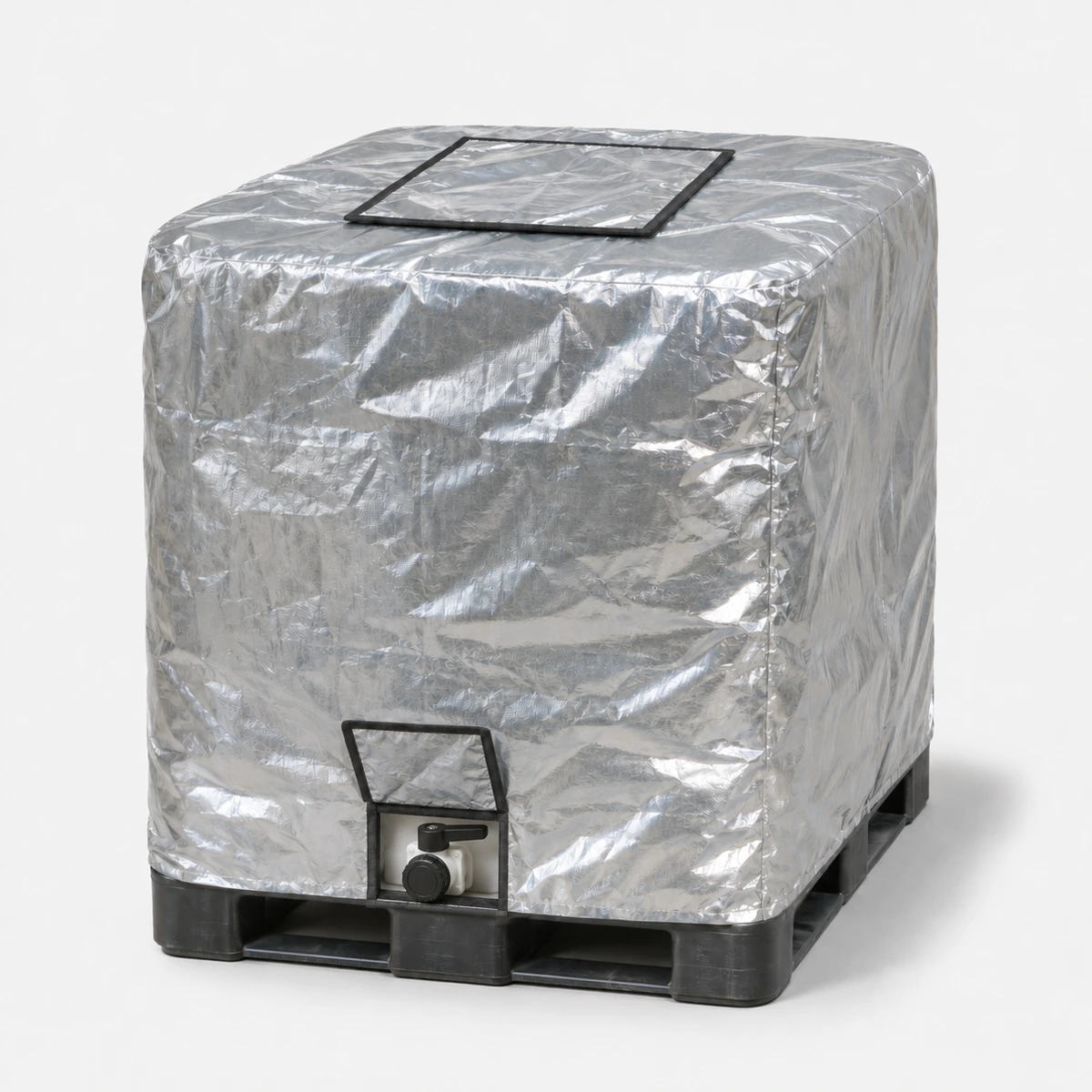
Dimensions
Locate the cap, valve and pallet deck
Provide maximum external width W, depth D and covered height H from pallet deck to tank top, including cage projections. State units. Record filler-cap diameter and position, valve centre height, offset and the space needed for fittings separately. Agree fitting allowance after checking a sample; neither a capacity label nor the drawing establishes a standard cover size.
Discuss IBC cover specifications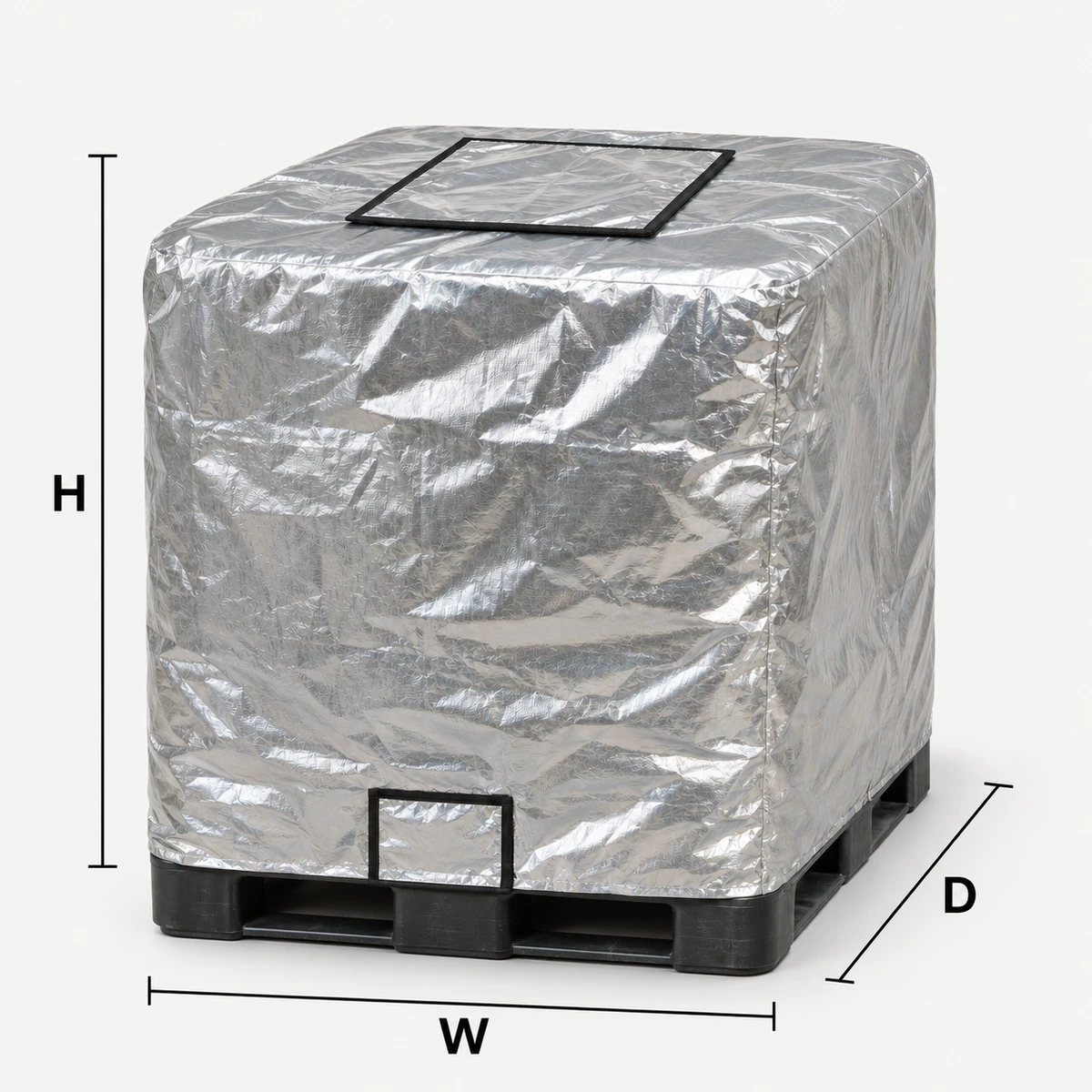
Materials & construction
Review the laminate and local overlaps
The gallery shows a flexible reflective cover with bound flap edges. Confirm aluminium foil or metallized facing, core, inner surface, joining and closure specification with a sample. Check the access-flap overlap without fouling the cap or valve. Appearance does not establish waterproofness, fire behaviour, food-contact suitability or compatibility with chemicals.
Discuss IBC cover specifications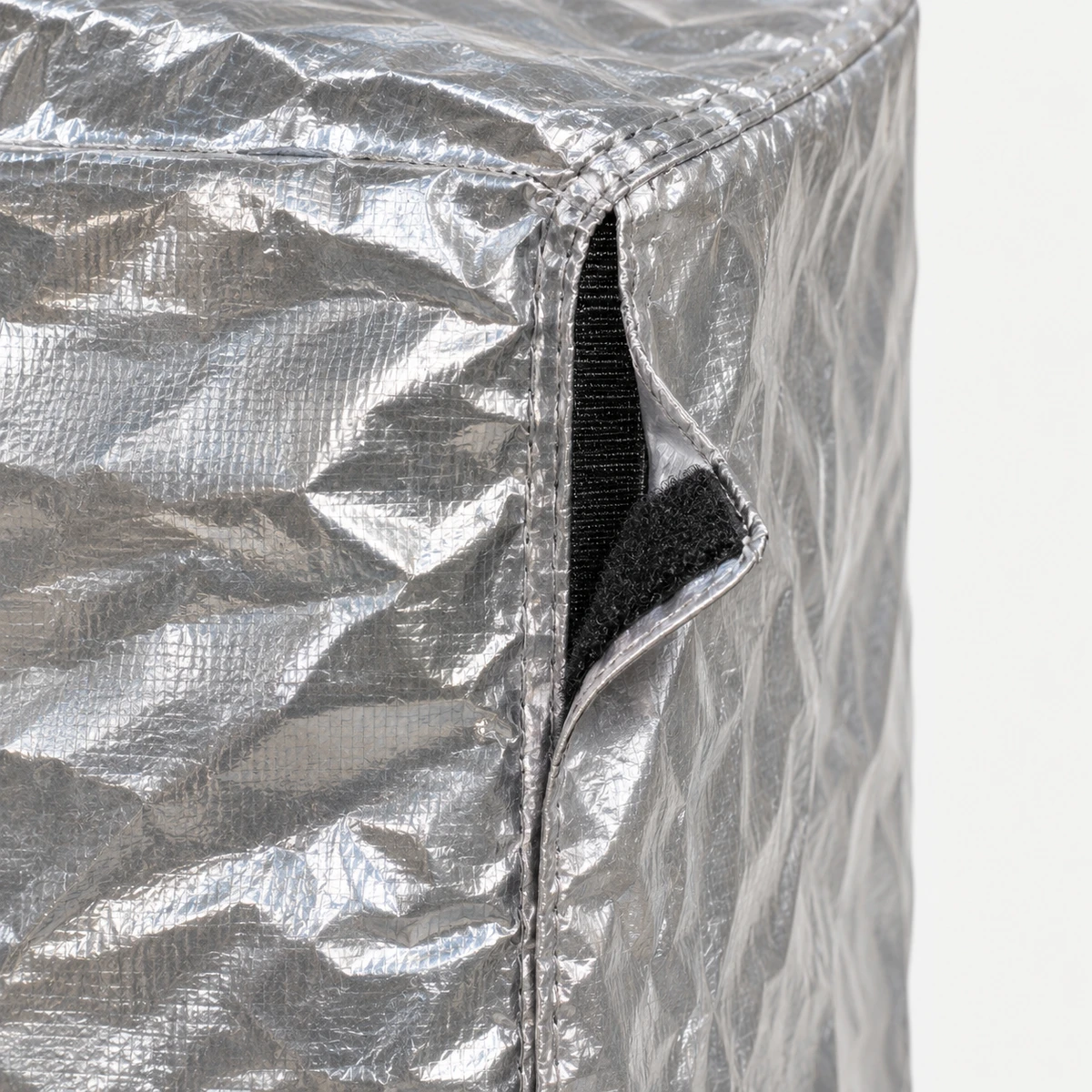
Handling & storage
Keep fork openings and connections clear
Fit the cover to the stationary IBC and check that the hem remains above fork openings. Do not lift, secure or move the container by the cover. Keep pressure-relief and ventilation features unobstructed as required by the tank instructions. Remove the cover before folding; inspect folds, seams and closures before reuse. No heater, hose or fittings are included by default.
Discuss IBC cover specifications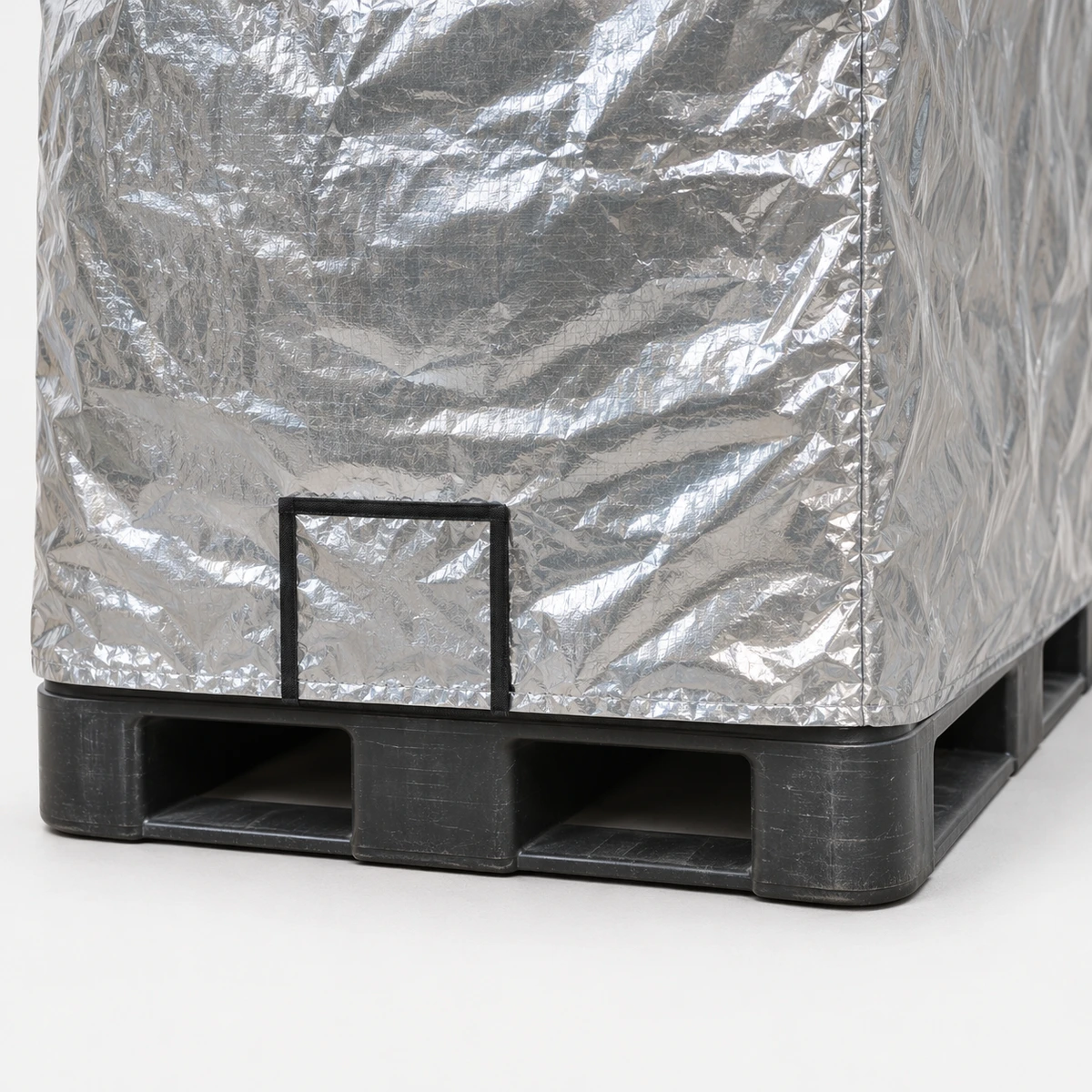
Order quantities
Separate fitting samples, first production and repeat orders by tank model and laminate. Confirm each cap and valve layout before agreeing quantity breaks.
Sample evaluation
Review material, dimensions, print and packing before placing a production order.
First production order
Confirm the minimum quantity for the selected material, size and artwork.
Volume & repeat orders
Request quantity breaks, packing efficiency and staged delivery options.
MOQ & price
A quote built around your specification.
- Minimum order
- Confirm by size, material and print version
- Unit price & currency
- Written quotation required
- Quantity breaks
- Based on your requested order quantities
Send the tank envelope, opening positions, laminate requirements, quantity and destination. Request sample, production, packing and freight charges separately. MOQ and price are set in the written quotation.
Request product pricingLead time
Schedule confirmed for your order
Schedule confirmed for your order
Schedule confirmed for your order
Schedule confirmed for your order
Approve the fitted sample on the actual IBC before production. Confirm materials, converting, inspection and transport separately; dispatch follows the approved specification and order.
Export documentation
Agree material specification, approved sample reference, invoice and packing list. Any thermal, cleaning or regulatory report must cover the actual cover and use. Tank approvals do not certify the cover; cover documentation does not approve the liquid or IBC.
Commercial invoice & packing list
Order quantities, packing, weights and shipping terms
Confirm for your orderMaterial & product specification
Layer composition, dimensions and approved sample reference
Confirm for your orderApplicable test documentation
Match the report scope to the material, intended use and destination
Confirm for your orderCoolant information, where applicable
Composition, handling and relevant safety documentation
Confirm for your orderReview the records behind the specification.
Explore affiliated-factory audits and material sample reports, with the named holder and scope. Confirm the match to your cold-chain order.
What to confirm before production
Measure external width, depth and height above the pallet deck. Locate cap, valve and fork openings separately; tank volume is not a cover dimension.
Confirm laminate, seams and closure by sample. The cover does not contact liquid, contain leaks, bear load or approve the tank. Tank and pallet are props.
Passive insulation supplies no heat or cooling. Validate contents, tank and route; images establish no freeze guarantee, temperature range, duration or certification.
A useful answer.
Is an IBC insulation cover the same as an IBC heater?
No. This is passive insulation outside the tank cage, without heating, cooling or a temperature setpoint. Specify and verify heating, refrigeration, hazardous-area use and freeze protection separately.
What should an IBC-cover enquiry include?
Send tank model, external dimensions, cap and valve positions, access clearances, laminate, quantity and destination. Confirm fitting and use conditions with a sample.
What are the MOQ and lead time?
MOQ and lead time depend on the product, material, artwork and production schedule. Confirm both against your exact specification; the published capacity figure is not a delivery-time commitment for an individual order.
Complete your packaging system.
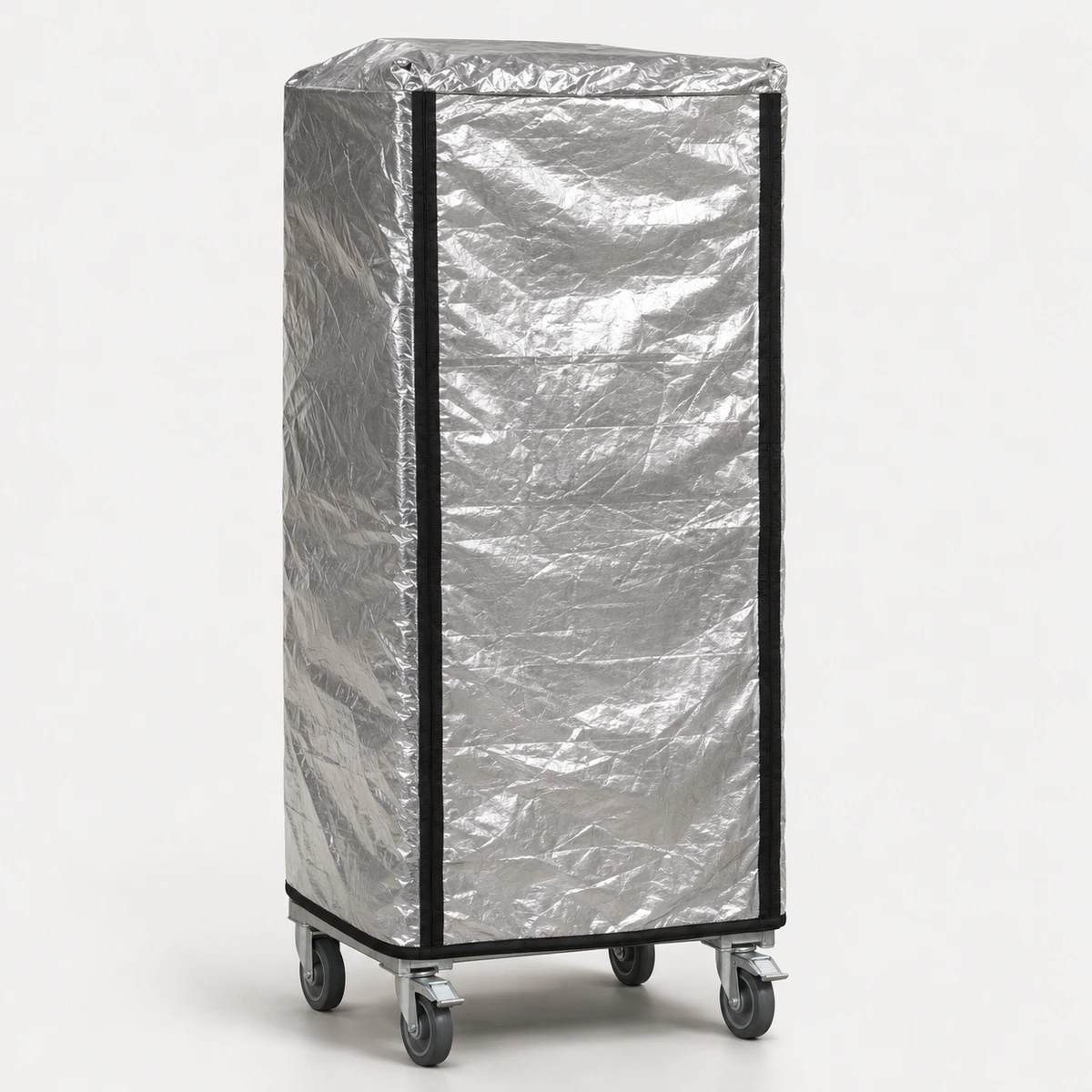
Insulated roll cage cover
Retail replenishment · distribution handovers · roll cage wrapping
Explore product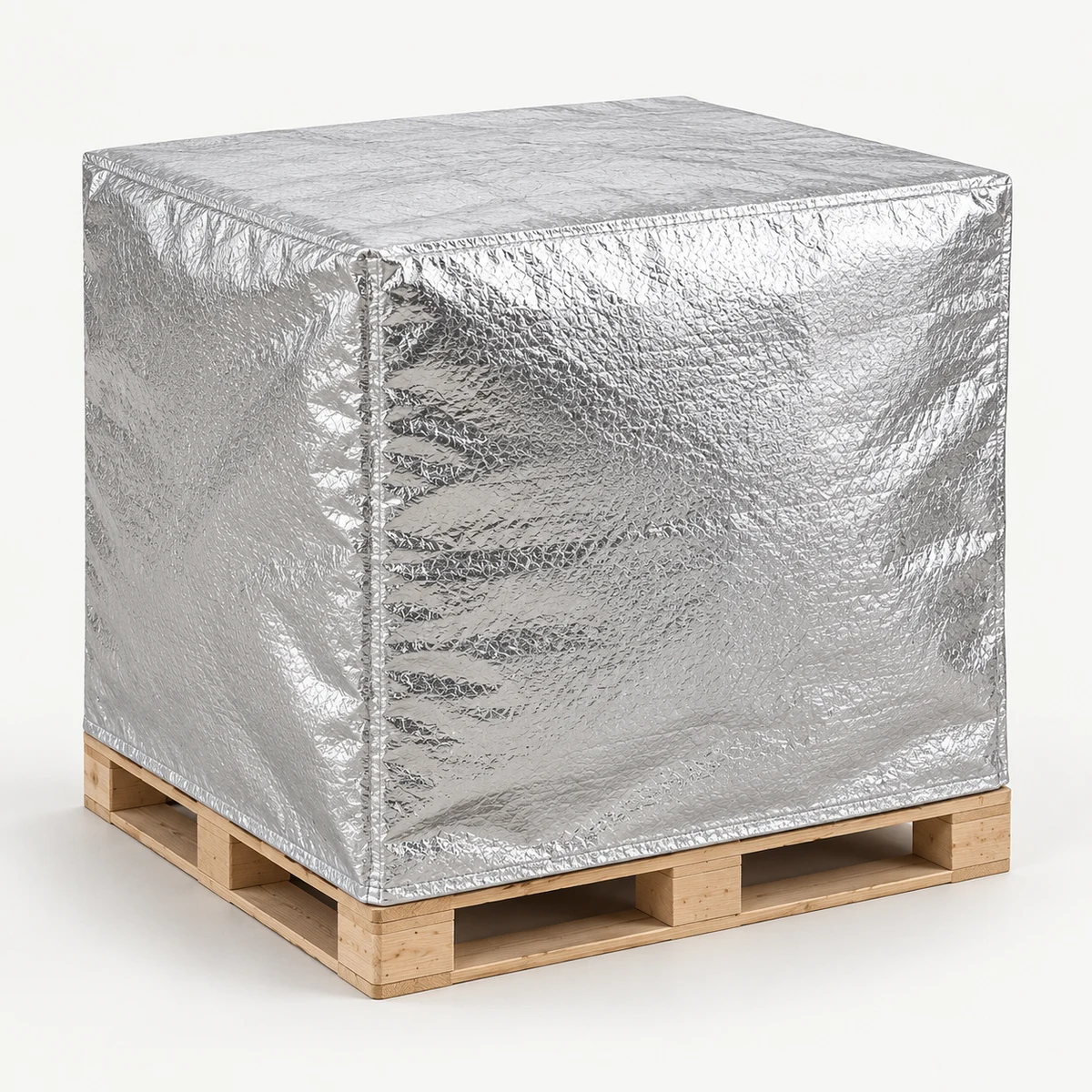
Insulated pallet cover
Palletized food shipments · warehouse handovers · short transfer stages
Explore product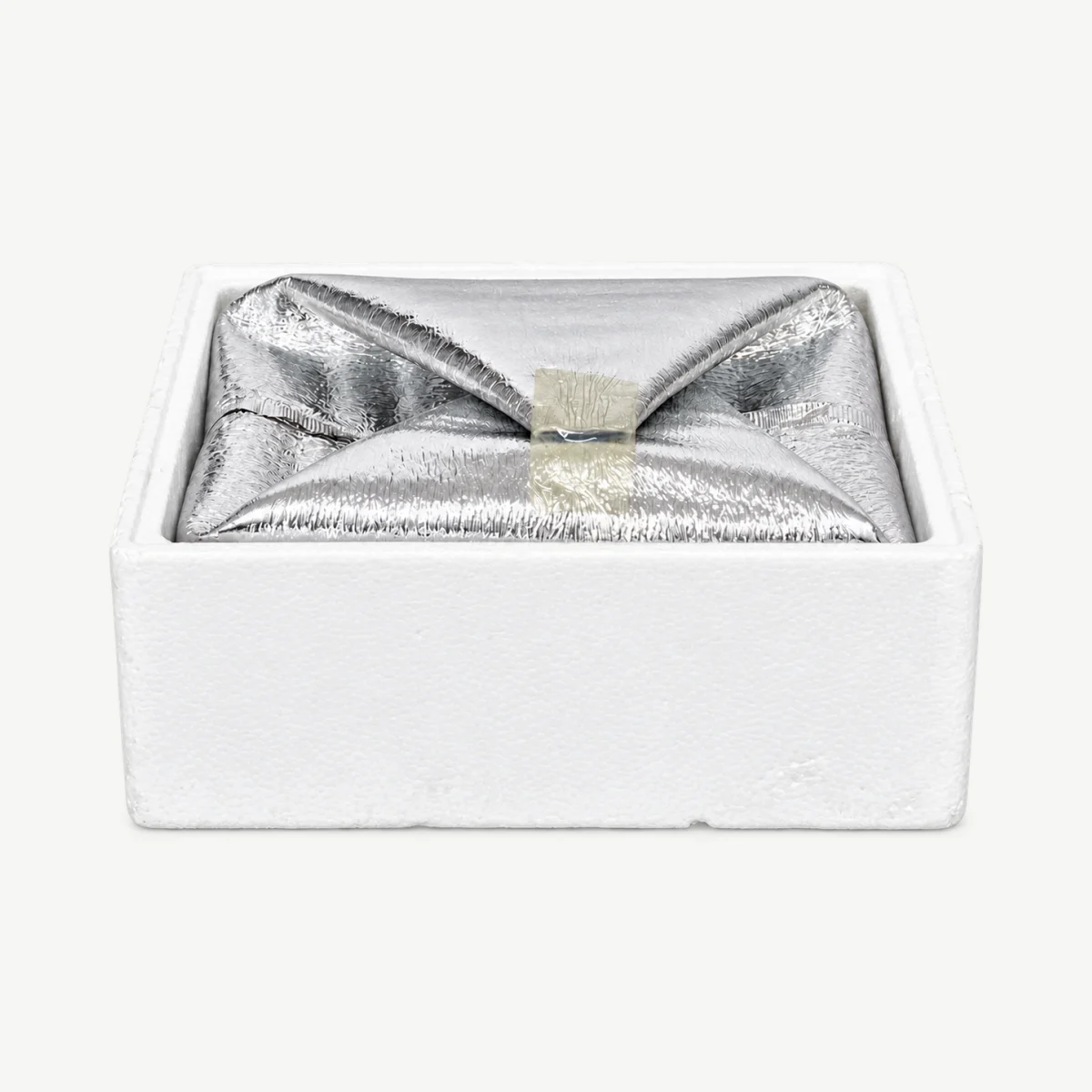
Foil insulated box liners
Outer-box lining · Packaged food shipments · Coolant pairing
Explore product