
Can You Compare Two Packaging Film Puncture Reports?
Start with the contact you are trying to prevent. A corner pressing against a wrap as the pack is closed and an object striking film during handling pose different questions. Read the test method and the specimen before ranking two films. If either differs, the larger figure may answer a different question.
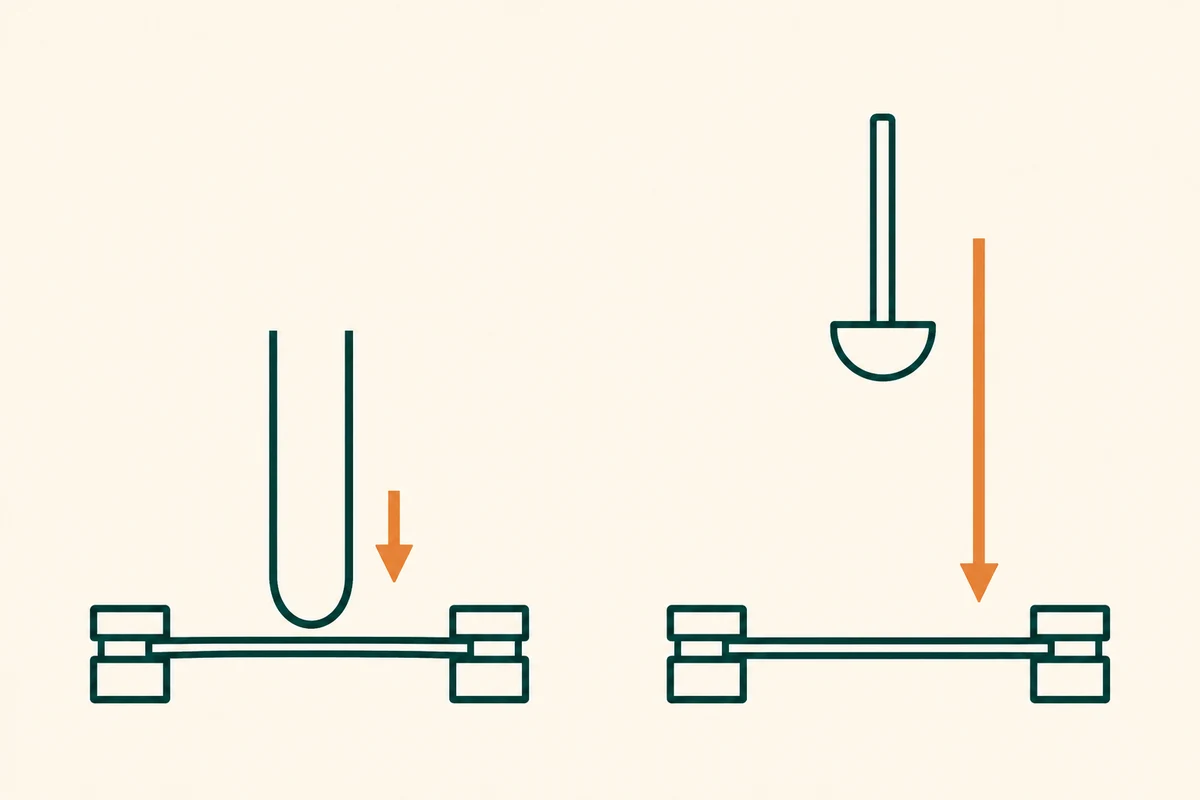
Match the test to the contact
ASTM F1306 characterizes the slow penetration of flexible barrier films and laminates under a driven probe. Its public scope identifies force, energy and probe penetration at failure. ASTM D1709 uses free-falling dart impact on plastic film and expresses its result as a dart mass associated with a specified failure rate. A force in newtons and a dart mass in grams describe different outcomes. Converting units cannot turn one result into the other.
If the observed concern is a corner pressing into the wrap, a suitable slow-probe comparison can help screen material. Ask the lab whether the actual specimen fits the method. If the concern is a blow, record what strikes what and ask for an impact evaluation suited to that contact. A dart test on film still leaves the behavior of a packed box open.
Read the specimen line before the result
Ask for the method edition, named result and units, probe or dart configuration and test conditions, along with the material code, layers, thickness and sampling direction if relevant. Compare the same reported quantity on specimens of the same scope under comparable conditions. If a report says only “puncture resistance,” ask for the actual report. If the methods or specimen definitions differ, request a like-for-like comparison for the shortlisted materials before using the numbers to decide.
For example, a report can identify the reflective facing alone while a quotation covers a facing bonded to formed air cells. Keep that report under facing evidence. Ask what specimen represents the supplied construction, which parts are in the measurement and whether the test scope covers that specimen. A report on an isolated layer leaves the bonded structure and the installed corner unverified.
Decide separately on the wrapped corner
YUANEN’s foil bubble roll page describes a reflective facing with formed air cells and calls for checking puncture, cell condition and the complete pack on the intended route. For a sample, record the roll construction, corner geometry, fold and closure as installed. If the installed wrap is marked or damaged, record the layer, position and contact point. When testing a change to corner protection or folding, keep the other pack details stable where possible so you can trace what changed.
Keep the material comparison and the assembled-pack check as separate purchasing records. Agree on the sample and on any applicable test plan before ordering. The linked methods and product listing do not establish a test result, a performance rating or a certification for a YUANEN order.
Sources and scope
Check the cited sources. Product specifications are subject to order confirmation and the agreed sample. This article is not a product test report or a regulatory certification.