
Trial the Roll Cage Curtain and Gate Before Ordering
A roll cage cover can fit the frame and still obstruct replenishment. Approve the sample by going through the complete access sequence at the working position. Check where the front curtain rests, how the cage gate travels if fitted, and whether the carton can leave the opening in its intended orientation.
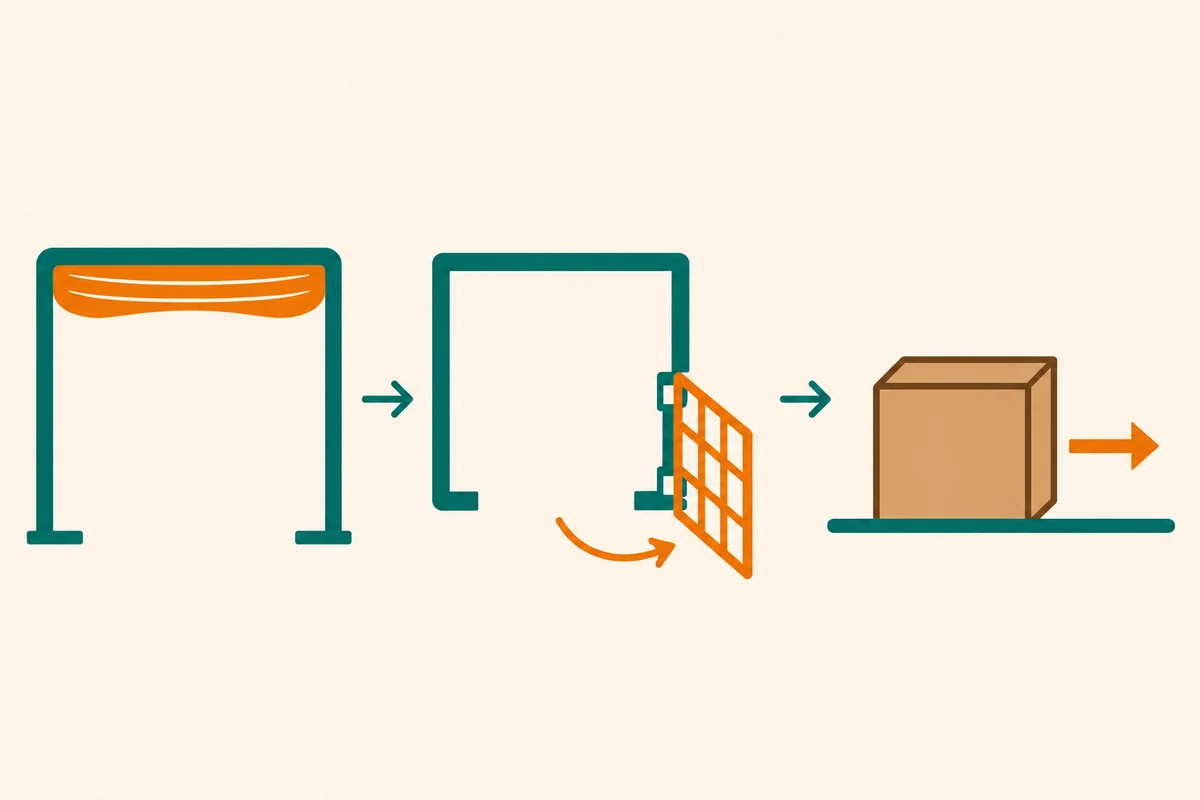
Map two openings on the same cage
The published YUANEN construction has a top-attached front curtain with overlapping side closures. The curtain is part of the cover. Any cage gate, latch and hinge belong to the cage being covered. Send the supplier a front view and a side view of that actual cage, with the normal access face and any gate swing marked. Record how the operator can fold or hold the curtain clear. If the intended cage has no gate, record that and trial curtain clearance and carton access on the open frame.
A frame’s measured width is useful for fitting, but the working opening is the space left after the flap, gate and latch are in their operating positions. Compare that path with the complete carton, including any protruding closure or handhold that is used during withdrawal. This identifies which interference needs attention before any wider cover is proposed.
Find the step that interrupts the handoff
Keep the cage stationary and secured for the trial. Open the curtain, then operate the gate as your team normally would. Withdraw a representative carton from the least accessible position within the team’s approved handling procedure. Reclose the gate and curtain in their usual sequence and check the side overlaps. Observe whether the hem stays clear of the castors and whether the cage’s brake and push points are accessible. Use the cage and its restraints to handle the load.
Record the first point of contact, its location and the position of each part. A flap that drops into the carton path calls for a review of how the flap is held clear. A gate that opens fully in open space but hits a rack at the intended work point calls for a review of cage orientation or work position. If the carton catches even with the curtain and gate clear, review the opening and carton path together. Each result leads to a different revision and repeat trial.
Keep the approved setup identifiable
Record the cage model, carton orientation, working location, sample revision and the access result together. Repeat the relevant steps if the cage gate, carton or handoff location changes. The trial can establish whether the sequence works with that setup. It gives no load-restraint or temperature claim for the cover. Confirm material, closure construction and supplied items with the approved sample and written order.
Sources and scope
Check the cited sources. Product specifications are subject to order confirmation and the agreed sample. This article is not a product test report or a regulatory certification.