
A Catering Bag Needs Working Space on the Trolley
A bag can sit on a trolley and still be difficult to open or lift off it. YUANEN’s current catering-carrier proposal uses a fold-down front and short side grips. Those features require working space around the loaded sample, beyond a comparison of bag width and shelf width. Assess the bag and the buyer’s actual trolley as a pair.
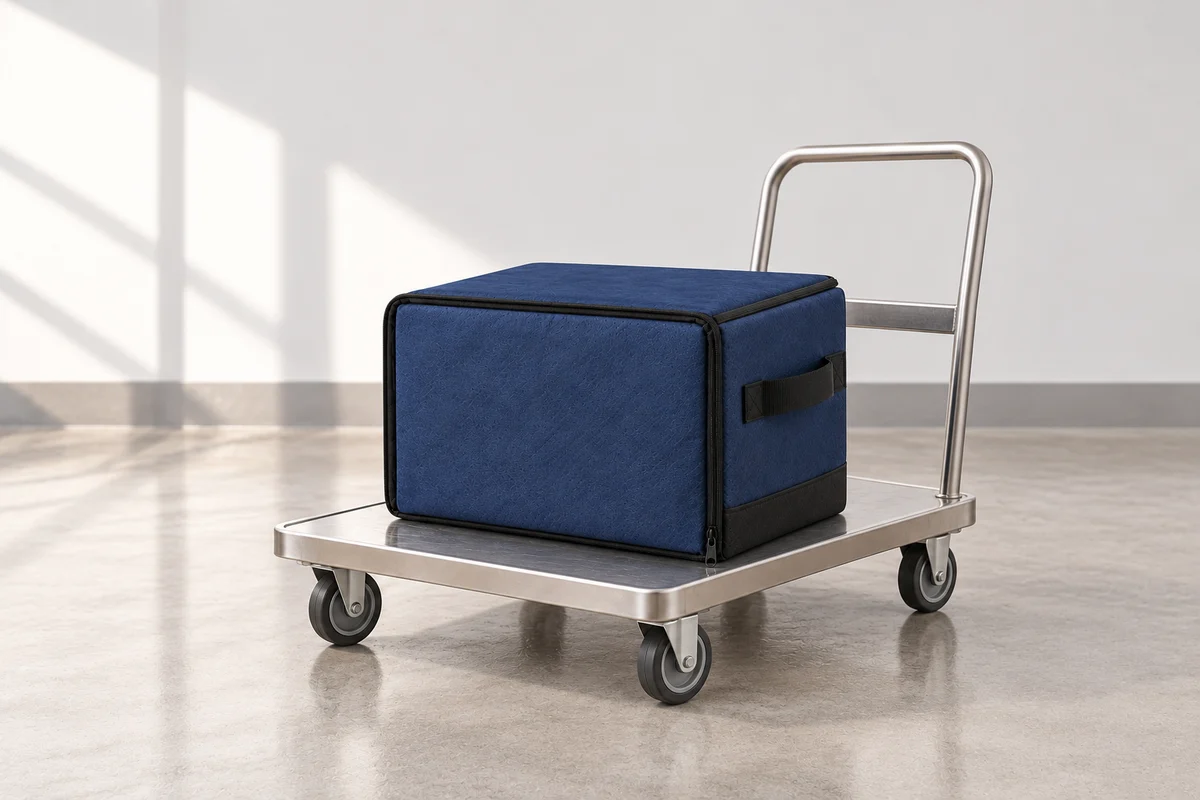
Measure the loaded outside envelope
Identify the bag-sample revision and load it with the agreed closed trays and any specified coolant. Measure its maximum outside length, depth and height with the zipper closed, including the side grips, seams and any outward bulging. Keep this record separate from usable internal dimensions. An empty, folded bag does not describe the space occupied during delivery.
- Bag record: sample revision ___; closed load arrangement ___; maximum loaded outside length × depth × height ___; units ___; front and side photographs ___.
Use the clear shelf area rather than the catalogue size
Record the trolley reference and the shelf or deck being assessed. Measure clear width and depth inside raised edges and between posts, plus the available height below an upper shelf where one exists. Note obstructions from crossbars, rails and the trolley handle. A nominal trolley dimension may describe its outside frame rather than the area supporting the bag.
Photograph the loaded bag in its intended orientation, showing where the base is supported. Record overhang or deformation for review instead of treating a matching width as approval. Follow the trolley manufacturer’s operating and load instructions. This guide provides no universal clearance, trolley load limit or permission to stack bags.
- Trolley record: reference ___; deck/shelf ___; clear width × depth ___; available height ___; posts/rails/handle obstructions ___; supporting area photograph ___.
Check access while the bag is in position
On a stable trolley positioned according to its operating instructions, check whether the front zipper can open fully and the front panel can fold down without catching a rail or the shelf below. Use the actual lidded tray to check the intended horizontal removal path. The lowered panel is not a confirmed load-bearing bridge between trolley and work surface; keep the load supported by the agreed handling arrangement.
Then confirm that both short side grips can be reached at the same time without trapping hands between bag and frame. Check the planned lift-off and replacement path using the agreed sample load and responsible handling team. Record the obstruction and orientation in photographs if the bag fits but the grips cannot be used. Fit on one trolley does not establish compatibility with another model.
Send a paired bag-and-trolley brief
Send YUANEN the bag and trolley records, actual tray-and-lid sizes, photographs of the support and access paths, and the sample revisions involved. Confirm the non-woven exterior, aluminum foil lining, proposed opening and grips on a physical sample. If a change to the bag is needed, repeat the affected interface checks before approval.
The trolley in the new cover is a prop, not an included product or evidence of a compatibility trial. Neither a fit record nor the image establishes base rigidity, rated carrying load, durability or temperature retention. Confirm those requirements separately under the agreed specification and test plan.
Sources and scope
Check the cited sources. Product specifications are subject to order confirmation and the agreed sample. This article is not a product test report or a regulatory certification.