
Define Which Layer an Insulation Thickness Quote Measures
Two insulation quotations can use the same millimetre unit while describing different parts of the material. Before deciding that a roll is thicker, thinner or out of specification, ask what the stated thickness includes and how it is measured. A larger number is not, by itself, evidence of better insulation or cushioning.
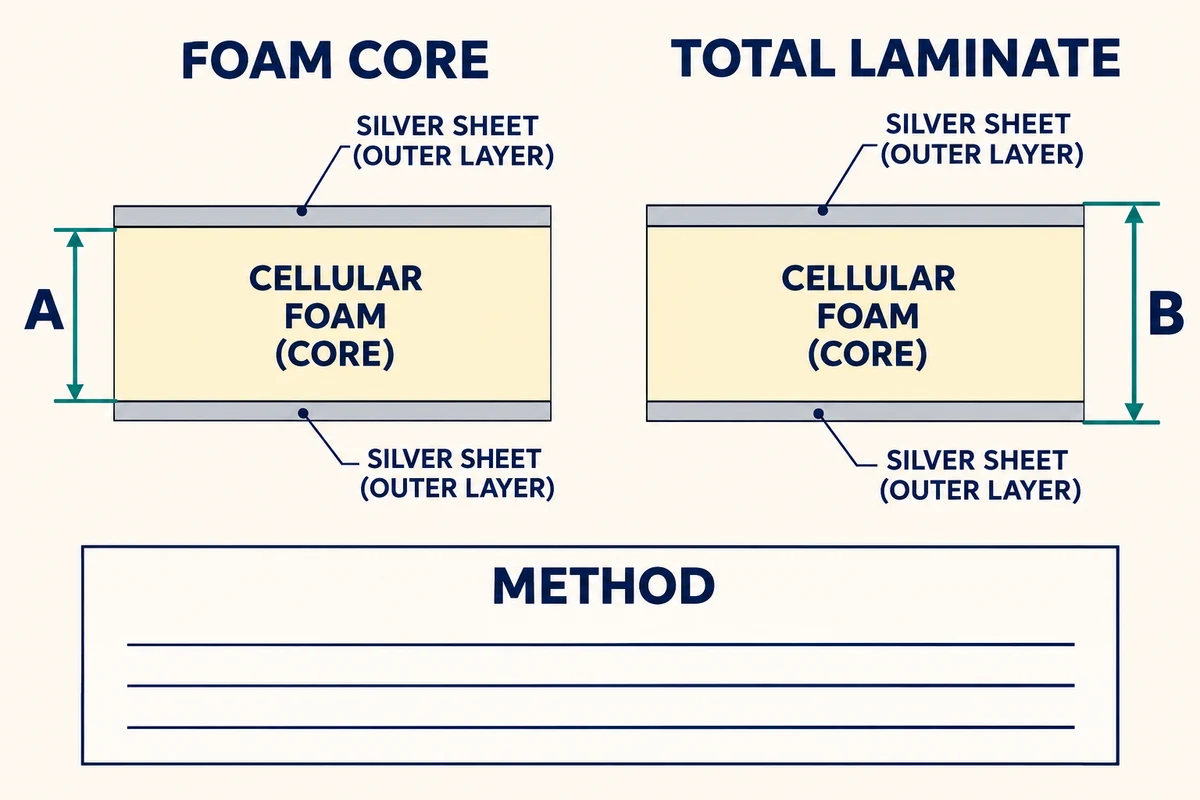
Start with the named measurement scope
YUANEN’s EPE foam foil roll specification asks for foam thickness T. Its foil bubble roll specification asks for laminate thickness T using an agreed low-pressure method. The first identifies the foam layer; the second identifies the laminate measurement. Do not silently treat the foam-only entry as total composite thickness, or import the EPE definition into a bubble construction. Ask for the proposed layer description beside the dimension.
If the supplier provides both core and total thickness, label them separately on the same material revision. Record whether the value applies to one sheet or another agreed specimen arrangement. Do not divide a stack reading and assume it reproduces a single-sheet result, and do not peel a bonded laminate apart as an improvised acceptance method.
Make quotation and sample readings comparable
Soft foam and formed air cells can be affected by the contact used to measure them. A close-up photograph of a gauge does not define the measurement conditions. Agree the instrument/method and how the specimen is supported and contacted; record the contact pressure or applicable agreed method, foot geometry, reading timing and specimen condition as required for that method. Do not choose a universal pressure or instrument solely from a supplier’s unrelated material page.
| Identify | Record together |
|---|---|
| Material and layers | Material/sample revision; foam-only or total-laminate scope |
| Dimension | Unit, nominal thickness and agreed tolerance |
| Method | Agreed measurement conditions, date and locations/readings |
Investigate a difference before calling it a failure
When a sample reading differs from a quotation, compare the material revision, measured layers, units and method first. Ask the supplier to explain the difference against the agreed nominal value and tolerance, with the recorded measurement conditions. If those conditions or tolerances were never agreed, resolve them rather than invent a pass/fail threshold after delivery.
Thickness alone does not establish density, facing composition, heat-transfer performance, an R-value or a shipping temperature duration. Those are separate specification or test questions. YUANEN’s proposed construction, supplied thickness range and acceptance method remain subject to the confirmed sample and order; this article reports no completed laboratory test or certification.
Sources and scope
Check the cited sources. Product specifications are subject to order confirmation and the agreed sample. This article is not a product test report or a regulatory certification.