
Record Delivered Insulated Bags Against the Agreed Sample
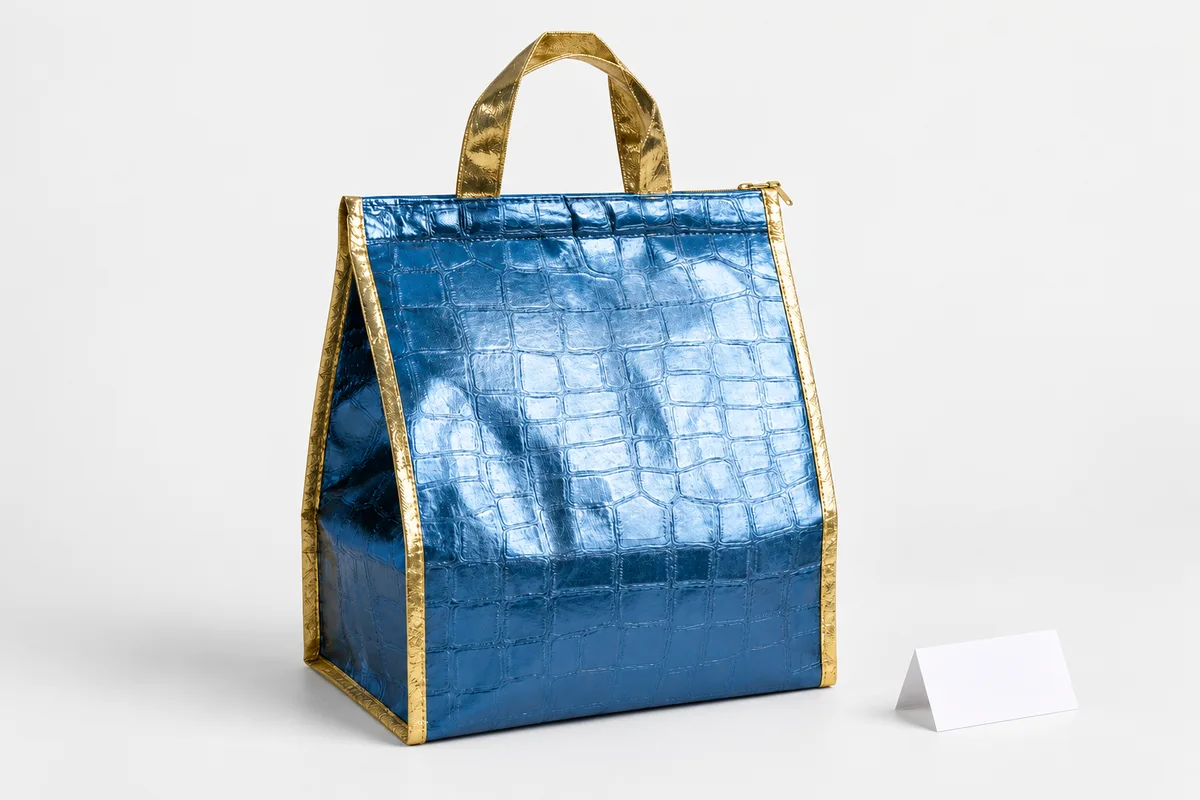
Sample approval and receipt of a production delivery answer different questions. At receipt, you need to know which specification applies to the bags in each carton and what to do with a difference. YUANEN’s upright grocery tote provides a concrete example: its top zipper, carry handles, side gusset and edge binding offer separate observation points. The record below helps a buyer compare the delivered configuration with the agreed sample; it does not claim that YUANEN has inspected a particular shipment.
Connect the carton to the right revision
Keep the purchase-order reference, supplier lot reference where supplied, carton number and sample or drawing revision together. Record which quantity belongs to each size, colour and artwork version. Compare with the written order and retained sample, not an earlier website image. If a carton contains mixed versions or lacks a clear reference, keep that uncertainty visible while the supplier identifies the contents.
Agree the selection and acceptance method before checking
Use the selection method, measurement points and tolerances agreed for the order. This guide supplies no universal sample percentage, AQL level or acceptable defect count. Record how many units you examined and how you selected them; that scope limits what the observations establish. A photograph of one bag cannot establish the condition of every carton. Any contractual acceptance plan or independent inspection requirement must be agreed separately.
Describe the difference at a repeatable location
On the upright tote, compare the zip path and opening, handle attachment, bottom and side gusset, then edge binding. Use the agreed reference points for dimensions and include the closure state. Record print placement or colour against the approved artwork or physical reference under the agreed viewing conditions. Material identity needs the order specification and relevant documentation; a metallic surface or silver lining alone cannot confirm the layers.
Give each observation an ID. Take an overview that shows where it is, followed by a close-up with an appropriate scale when useful. State what you can see, such as an unjoined edge at the handle attachment, rather than guess its cause or label the entire lot defective. Keep the original photos and identify the affected units so the supplier can repeat the comparison.
Keep a difference-and-disposition register
Use these fields for each observed difference. A blank or unresolved result stays open until the responsible buyer and supplier agree what happens next.
- Order / lot / carton: ____; size and artwork version: ____; agreed sample or drawing revision: ____.
- Units selected and method: ____; observation ID and location: ____; measured result and agreed criterion: ____.
- Photo references: ____; affected units kept apart: ____; supplier response and agreed action: ____.
- Status: accepted / held for decision / returned or reworked as agreed: ____; decision owner and date: ____; recheck reference: ____.
Close the record before releasing affected units
Keep held units identifiable and separate from bags released for use. Confirm replacement, rework, further checks or acceptance of a documented deviation in writing as appropriate to the order. After corrective work, link the recheck to the original observation rather than erase it. Cosmetic acceptance does not establish handle load, leak resistance, thermal duration or regulatory compliance; verify any required performance under its agreed method.
For a YUANEN enquiry about a delivery difference, provide the order reference, sample revision, carton and observation IDs, photographs and requested next action. Agree final specifications and disposition with the supplier. This is a buyer’s record template, not an inspection certificate or a report on a delivered YUANEN lot.
Sources and scope
Check the cited sources. Product specifications are subject to order confirmation and the agreed sample. This article is not a product test report or a regulatory certification.