
Match Conditions Before Comparing Insulated-Bag Test Reports
A longer duration in one thermal test report does not settle which insulated bag suits your order. First check whether the two reports describe comparable systems and tests. Keep differences and missing information visible instead of ranking unlike results.
Identify the tested item before using its result
YUANEN’s ice-cream delivery-bag proposal has a cylindrical body and round zip lid. Its catering-bag proposal opens at the front for horizontal tray access. Both currently specify a nonwoven exterior and foil lining, with the insulation specification confirmed by sample. Shared material names do not establish the same tested assembly.
Link each report to the sample or configuration revision actually tested, including closure, lining, contents and cooling components. A photograph can help identify an arrangement, but it does not establish hidden layer specifications or the preparation state of the coolant. Neither product page establishes a fixed hold time for an untested order.
Put both reports beside the same questions
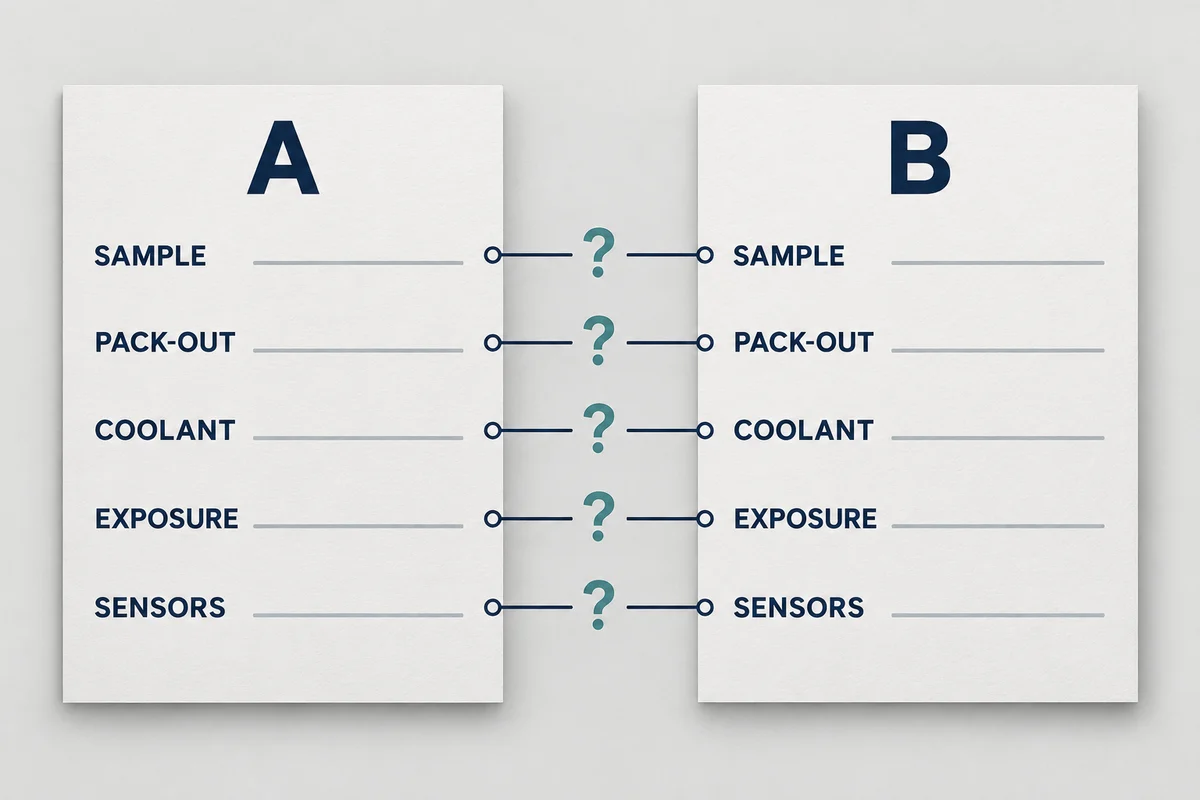
For each row below, enter Report A’s reference and value, Report B’s reference and value, then mark same, different or unknown. “Same” records a match in the stated condition; it does not mean the bag has passed your application. This is a procurement worksheet, not a test protocol or a record of YUANEN test results.
| Field | Record from each report | Question to resolve |
|---|---|---|
| Sample identity | Bag model, revision, closure and layer specification | Does the report identify the offered assembly? |
| Complete load | Containers with lids, contents, quantity, positions and separators | Could a changed load or layout change the comparison? |
| Starting state | Payload starting condition; coolant identity, amount and preparation record | Do both records explain what was ready at packing? |
| Exposure and handling | Time sequence, ambient conditions, openings and any transport treatment | Was the same challenge applied throughout? |
| Measurements | Measured object, sensor positions, calibration reference and recording interval | Are these comparable measurements rather than different locations or objects? |
| Decision basis | Acceptance criteria, end point, individual results and deviations | What exactly does each reported duration mean? |
Resolve a difference before drawing a purchasing conclusion
Keep an unknown field unresolved and request the underlying record from the responsible test team. For a difference, ask whether it limits the report’s use, needs a documented assessment or calls for another test. Do not adjust the two durations by an invented correction factor.
Attach the completed comparison and the proposed pack-out revision to the purchasing record. Confirm the offered materials, dimensions and accessories with the sample and written order. Keep the sensor-position record and coolant-preparation record alongside it so a later revision can be reviewed against the same basis. This comparison does not set food-safety limits, certify a product or promise a delivery temperature.
Sources and scope
Check the cited sources. Product specifications are subject to order confirmation and the agreed sample. This article is not a product test report or a regulatory certification.