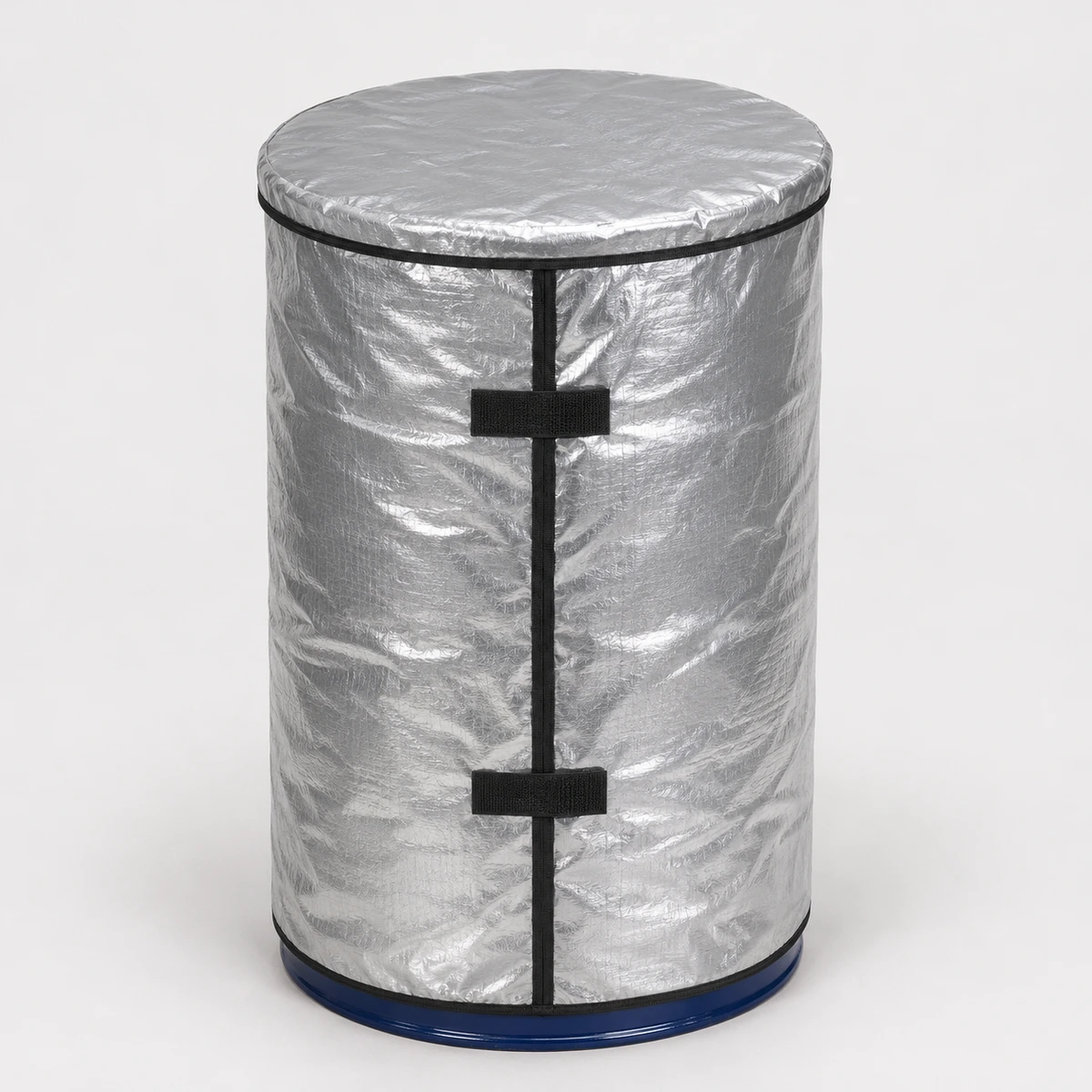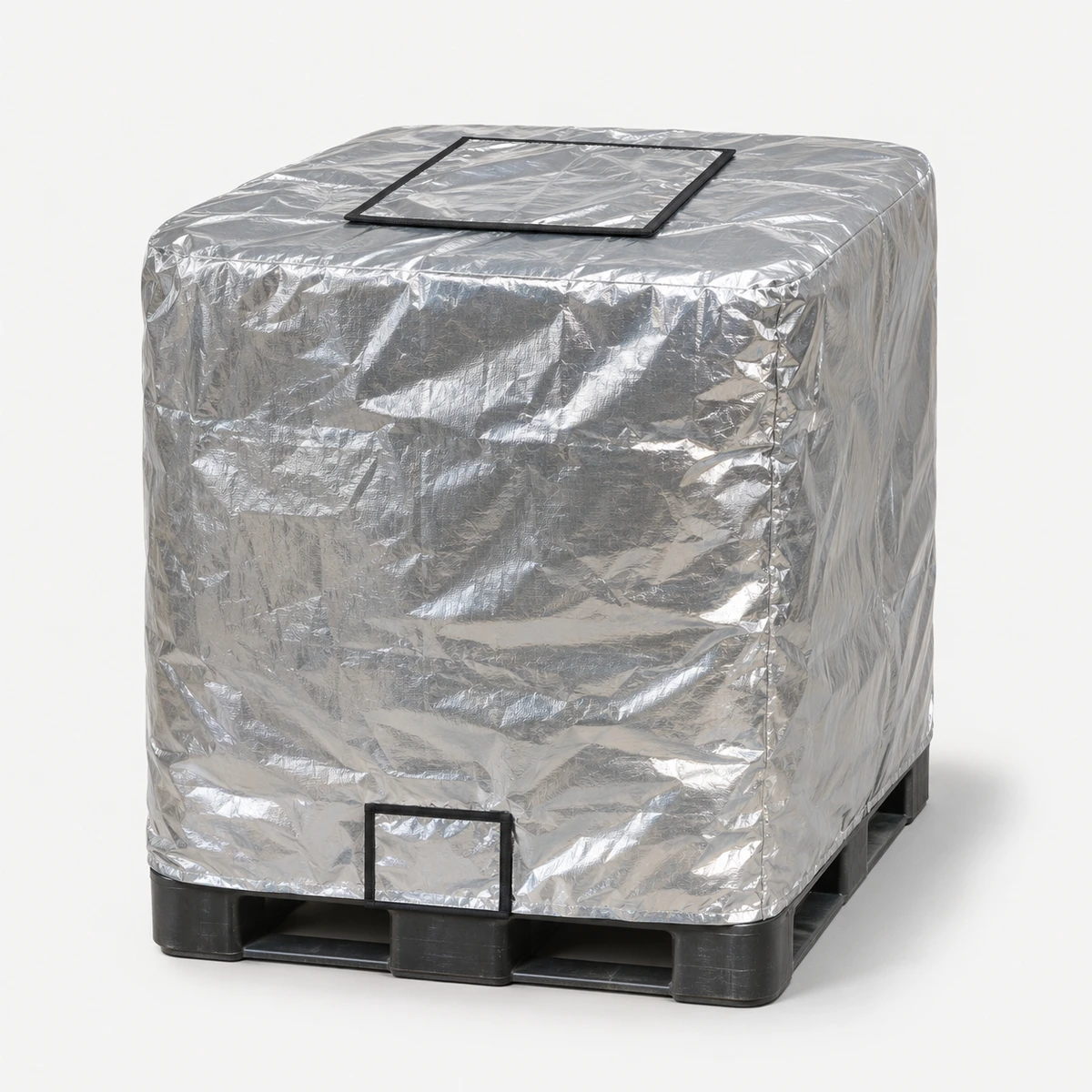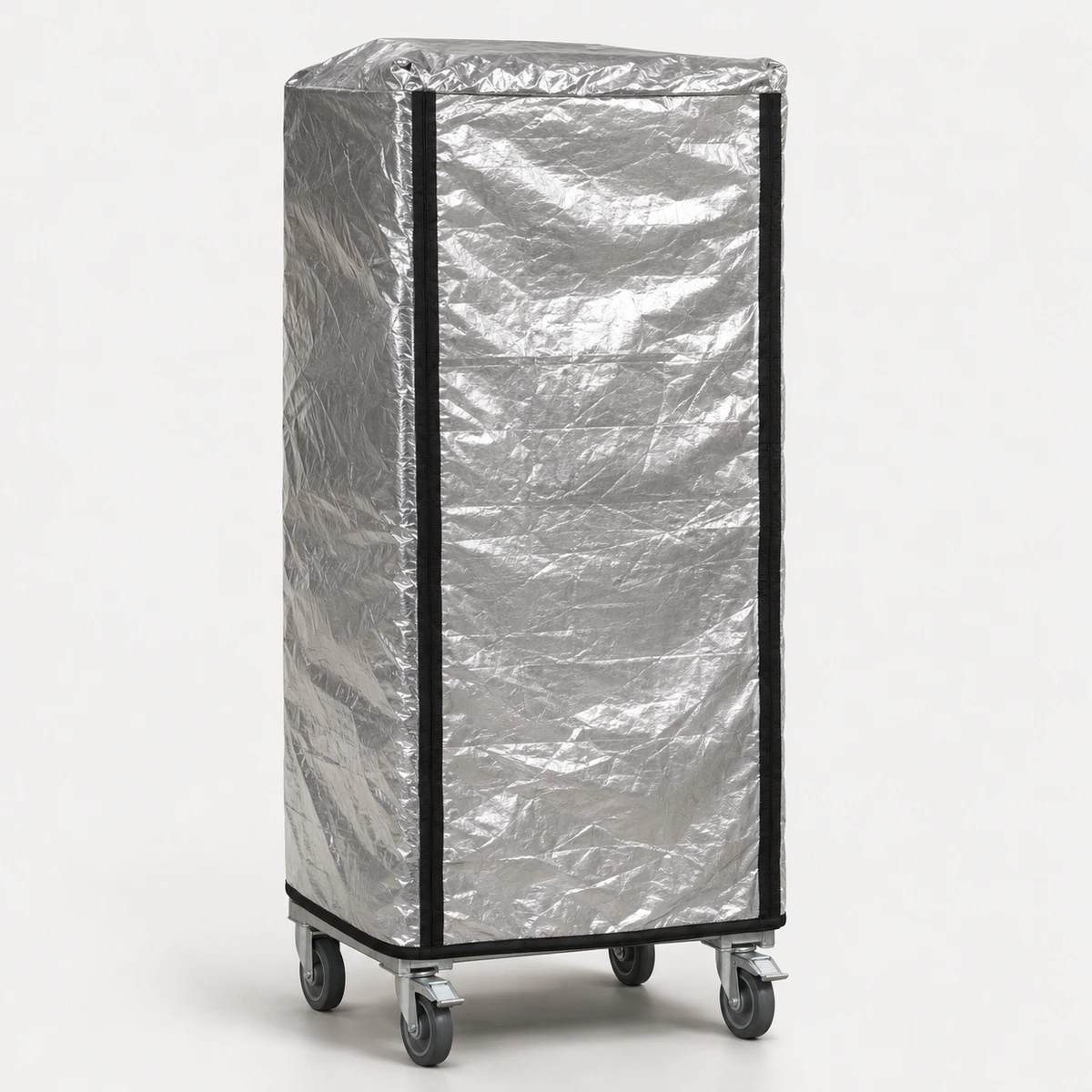
The photograph shows the appearance and details of the pictured sample. Contents and scene accessories demonstrate loading or use; their presence does not mean they are included.
Foil insulated box liners for cold-chain packing
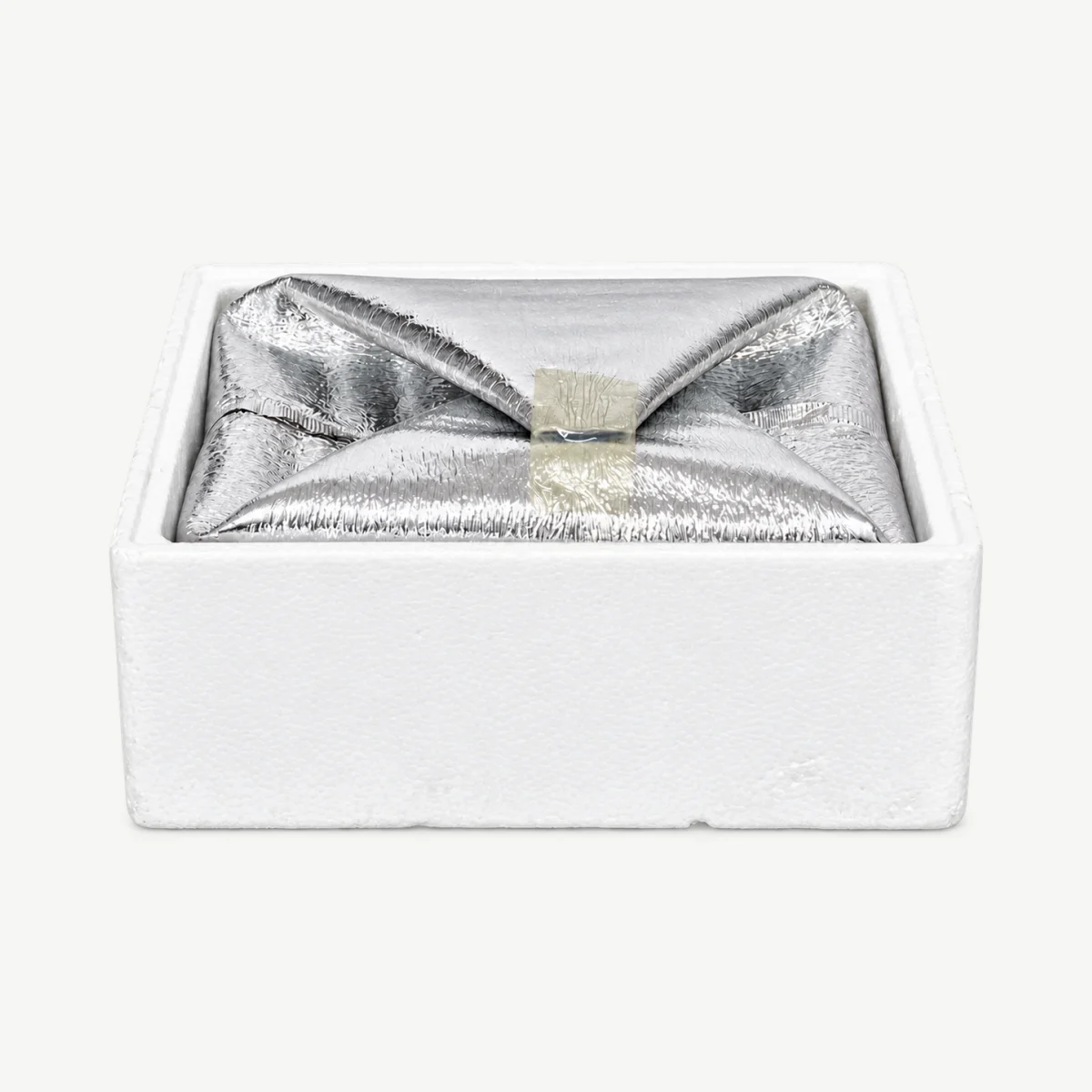
Foil-faced insulating bags used as liners inside an outer shipping box. The supplied photograph shows a liner folded closed within a foam box, helping buyers plan box fit and top closure. Specify the usable box interior, packed contents and coolant space; the outer box is a demonstration prop, not part of the liner quotation.
Confirm the selected product, materials, dimensions and supplied items when ordering. For customization, agree the sample, colour and artwork as applicable, and record the final specification in the written order.
Applications
Outer-box lining · Packaged food shipments · Coolant pairing
Foil-faced insulating bags used as liners inside an outer shipping box. The supplied photograph shows a liner folded closed within a foam box, helping buyers plan box fit and top closure. Specify the usable box interior, packed contents and coolant space; the outer box is a demonstration prop, not part of the liner quotation.
Start with your filled containers and delivery conditions. Review loading, closing and handling with a sample before confirming the packing format.
Contents & filled weight
Route & ambient conditions
Container & coolant fit
Materials & construction
Foil-faced insulating liner; foam type, thickness and layer arrangement to confirm
Confirm the foil-facing, insulating layer and bonding specification together. Edge sealing and gusset construction must match the selected format; agree thickness and dimensional tolerance before production.
- Measure the usable interior of the actual outer box, including lid steps or corner profiles, before choosing the liner dimensions.
- Plan top-fold allowance, coolant placement and removal of the packed contents. The liner and outer box must be checked as one loaded system.
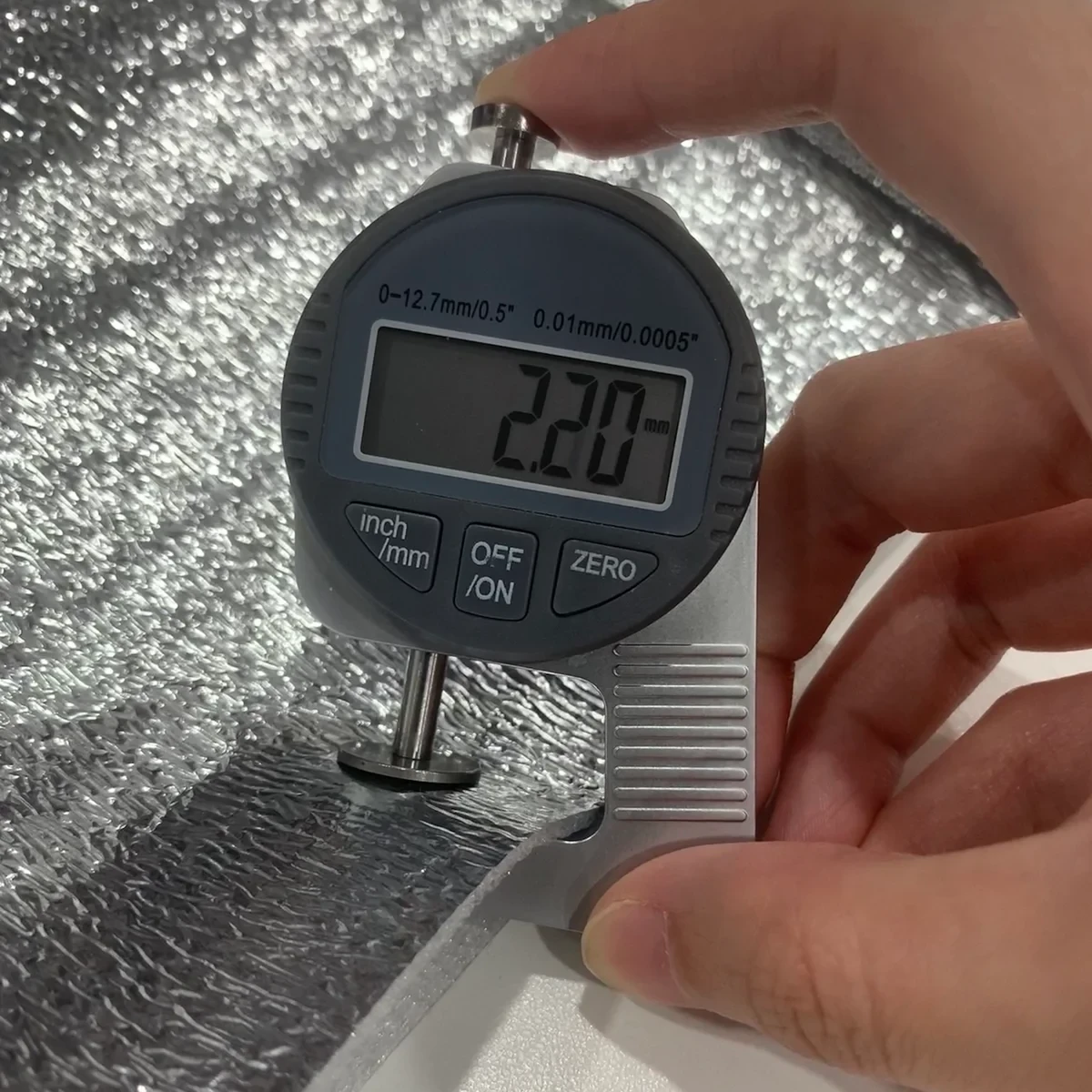
Product functions
Insulation structure
A specified composite construction helps limit heat exchange during handling.
Practical packing
Match the opening and usable space to the actual product container.
Brand customization
Agree dimensions, artwork and finishing against a sample.
Temperature range and retention time depend on the complete loaded system and test conditions. No untested hour or temperature rating is claimed.
Order quantities
Compare three order scenarios using the same approved specification. Quantity breaks are set in your written quotation for each size and artwork version.
Sample evaluation
Review material, dimensions, print and packing before placing a production order.
First production order
Confirm the minimum quantity for the selected material, size and artwork.
Volume & repeat orders
Request quantity breaks, packing efficiency and staged delivery options.
MOQ & pricing
A quote built around your specification.
- Minimum order
- Confirm by size, material and print version
- Unit price & currency
- Written quotation required
- Quantity breaks
- Based on your requested order quantities
Send size, quantity, material, artwork and destination. Ask for sample/setup charges, packaging, freight, delivery terms and quotation validity to be listed separately.
Request product pricingLead time
Schedule confirmed for your order
Schedule confirmed for your order
Schedule confirmed for your order
Schedule confirmed for your order
Sampling, manufacturing and transit are separate periods. The confirmed quotation should state the starting conditions and planned dispatch date; destination arrival also depends on transport and customs.
Dimensions
Specify usable space, not just the outside size.
Provide width × depth × height and mark internal or external dimensions. Allow space for coolant, the closure and loading clearance. For flat pouches, specify width, usable height and flap separately.
Custom dimensions and tolerances are confirmed during sampling. Supply mm or inches consistently (1 in = 25.4 mm).
Width × Depth × Height
Export documentation
Agree the documentation required by the destination and the exact product construction before ordering. These are document categories to review, not a claim that a certificate has been issued.
Commercial invoice & packing list
Order quantities, packing, weights and shipping terms
Confirm for your orderMaterial & product specification
Layer composition, dimensions and approved sample reference
Confirm for your orderApplicable test documentation
Match the report scope to the material, intended use and destination
Confirm for your orderCoolant information, where applicable
Composition, handling and relevant safety documentation
Confirm for your orderReview the records behind the specification.
Explore affiliated-factory audits and material sample reports, with the named holder and scope. Confirm the match to your cold-chain order.
Insulated chocolate packaging
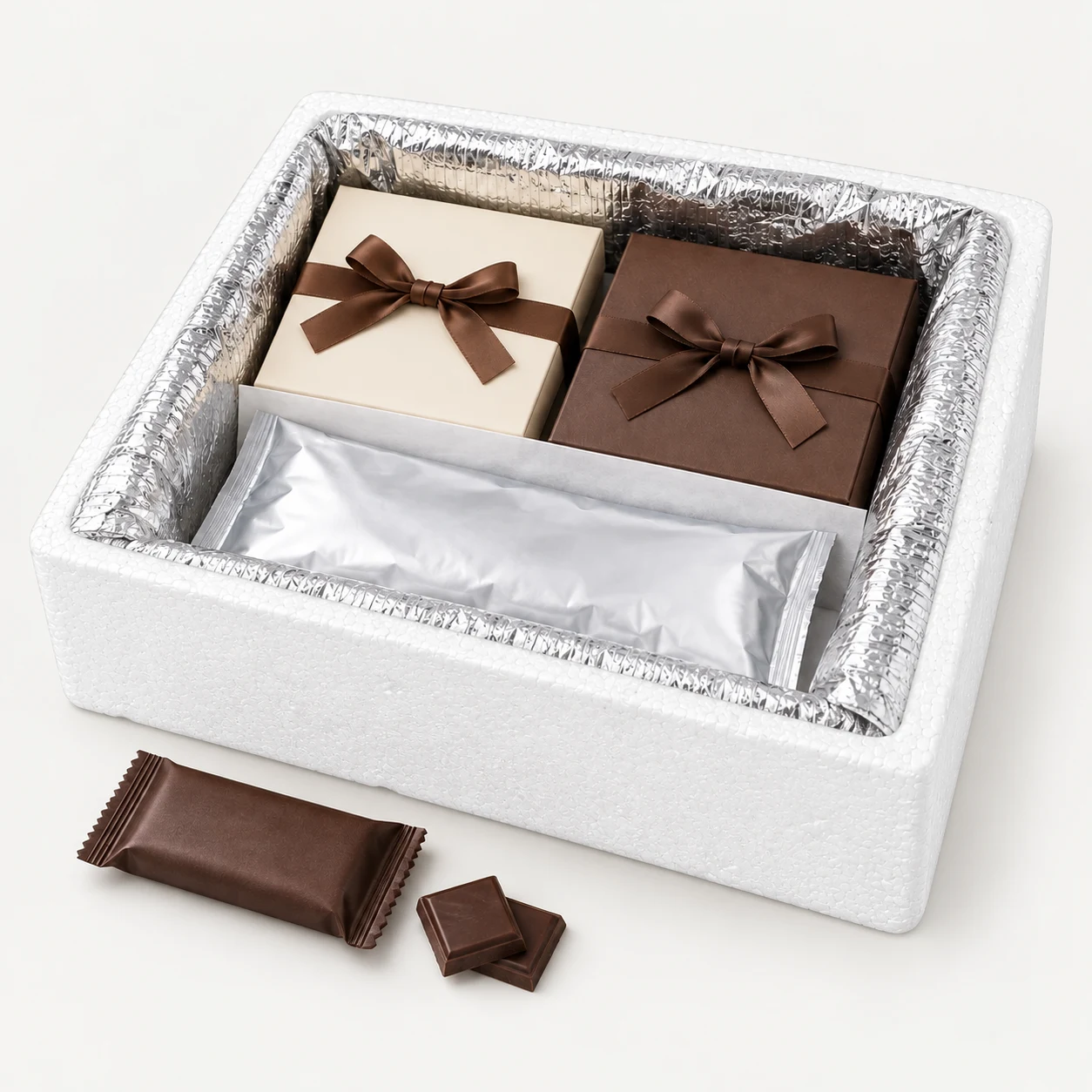
Plan a liner around the finished gift box, its protective packing and the agreed coolant arrangement. A shallow gift box needs a different layout from a deeper foam shipping box, even when both use the same foil liner material.
- Measure the closed gift box, including sleeves and ribbons. Reserve space for corner protection and the liner’s top fold.
- Specify any separation between coolant and the gift packaging. Check moisture exposure and box appearance in the agreed trial.
- Provide the chocolate’s required temperature conditions and delivery route for a complete pack-out test. The liner alone does not guarantee that chocolate will not melt.
Send these details for a quotation
Gift-box dimensions and packed mass; protective layers; proposed coolant and separator; route and ambient conditions; order quantity.
Discuss this packing arrangement ↗Meal-kit and prepared-meal shipping liners
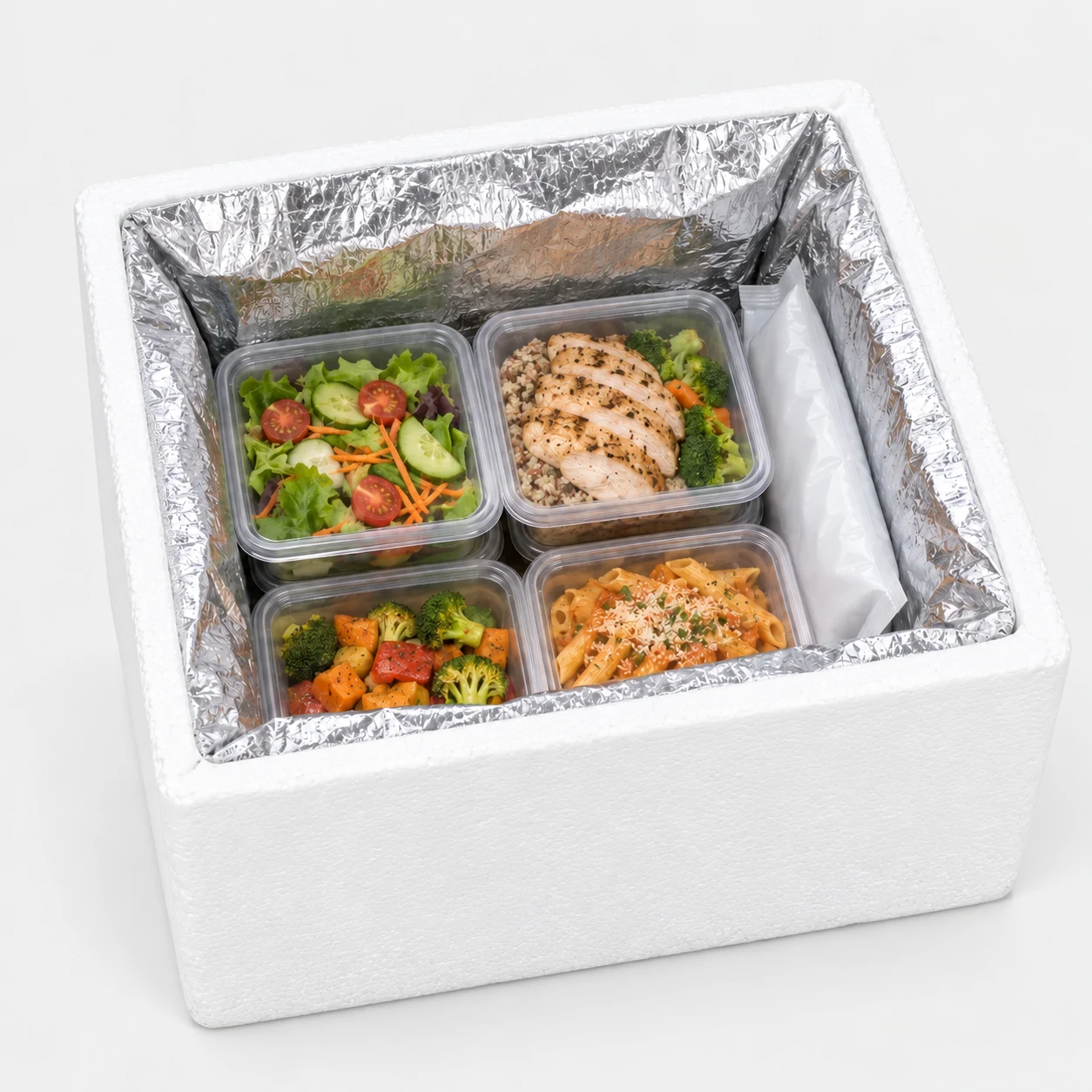
Fit the liner to a foam shipping box carrying separately sealed food packs or closed meal containers. This is a box-lining proposal for shipment, with its own loading and closure requirements.
- List every filled pack and its maximum outside dimensions. Check the combined stack rather than multiplying one nominal container height.
- Allocate coolant space without pressing on lids or seals. Separate products with incompatible storage requirements; do not assume that one liner provides independent temperature zones.
- Review box corners, top-fold clearance and removal order with the loaded sample. Confirm the foam outer box and complete route test separately.
Send these details for a quotation
Foam box’s usable interior; filled container list and loading sketch; total mass; coolant layout; required storage conditions and route; quantity.
Discuss this packing arrangement ↗Insulated liners for packaged seafood
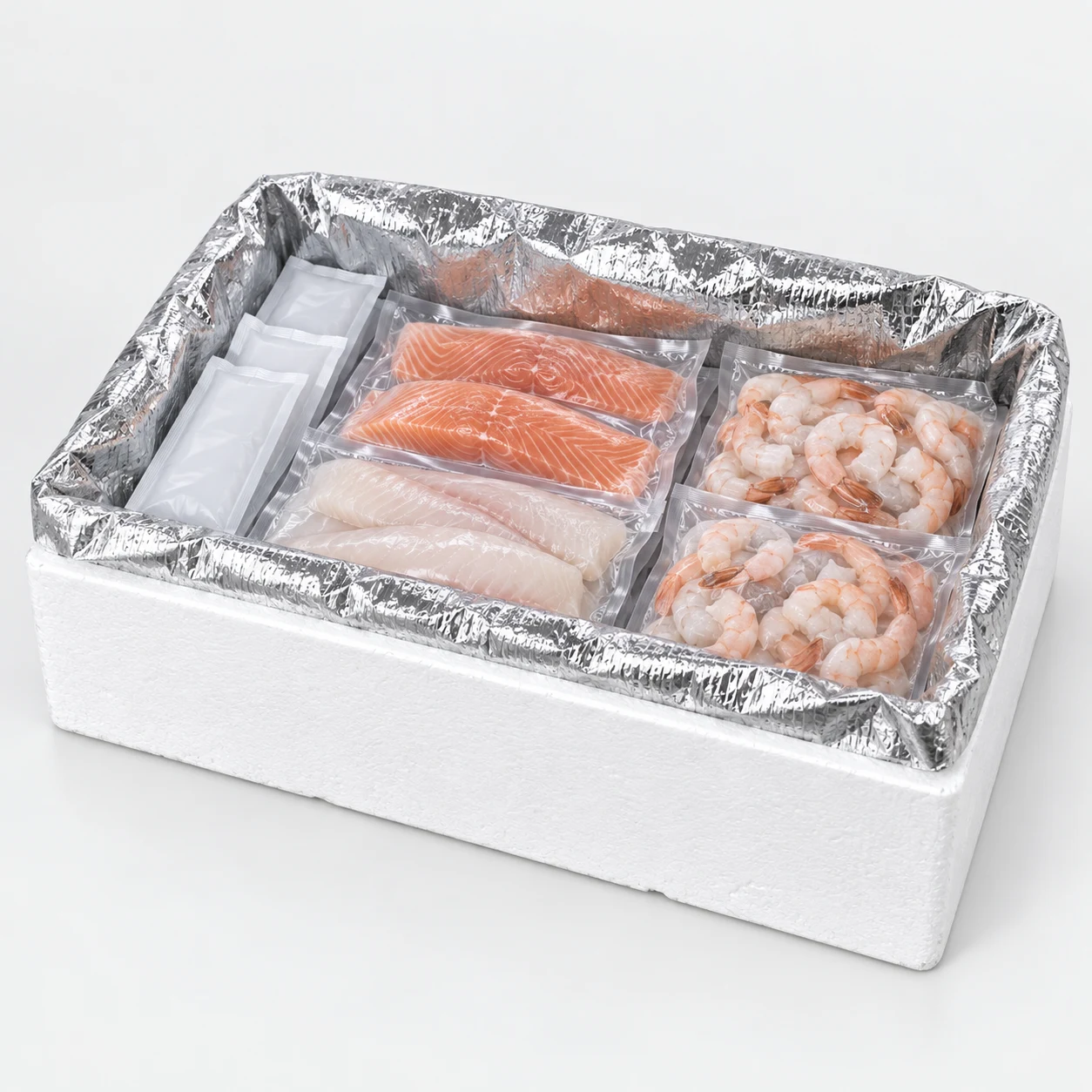
Use the foil liner around separately packaged seafood inside an agreed foam outer box. Specify the food package, any secondary leak containment and the insulating liner as distinct components.
- Measure the sealed food package and inspect its corners and closures. Keep exposed food and loose liquid out of direct contact with the liner unless the exact intended use has supporting evidence.
- Agree leak containment and coolant positioning for the selected package. Do not treat an insulating seam as a watertight barrier or the liner as a live-fish transport bag.
- State whether the shipment is chilled or frozen and define the required conditions. Check loaded handling and thermal performance with the actual outer box and route.
Send these details for a quotation
Sealed-package dimensions and mass; usable box interior; leak-containment proposal; coolant and target conditions; route; order quantity.
Discuss this packing arrangement ↗These are three applications of the existing foil box-liner range. Final liner dimensions, layer construction, closure, MOQ and delivery terms follow the agreed sample and quotation. Food-contact suitability and temperature performance require evidence for the intended use.
What to confirm before production
Measure the usable interior of the actual outer box, including lid steps or corner profiles, before choosing the liner dimensions.
Plan top-fold allowance, coolant placement and removal of the packed contents. The liner and outer box must be checked as one loaded system.
Quote the liner separately from the outer box and ice packs. Material-measurement photos illustrate inspection only; request the ordered construction and its test scope.
A useful answer.
What dimensions are needed for an insulated box liner quotation?
Send the usable internal width, depth and height of the outer box, plus the filled product dimensions and planned coolant layout. Allow for liner thickness and the top fold before approving a sample. This is a box-lining application of foil insulated bags; it does not imply that the outer box or coolant is included, or that a shipping duration has been validated.
What information is needed for a custom bag quote?
Share the bag type, usable dimensions, layer structure, quantity, artwork, delivery destination and target date. Include testing, compliance and packing requirements so quotations cover the same scope.
What are the MOQ and lead time?
MOQ and lead time depend on the product, material, artwork and production schedule. Confirm both against your exact specification; the published capacity figure is not a delivery-time commitment for an individual order.